









Skip to content

8× MICROSOFT MVP · PRODUCT ENGINEERING · SPEAKER · COMMUNITY BUILDER

Hi, I’m Dino!This site is about me and my journey. My work is about you, with respect and a great deal of gratitude.

For almost 30 years, I have built, tested, operated and explained Microsoft technology, from the datacenter to Redmond. I translate technical reality into actionable product feedback, clear decisions and systems that still hold at 3:07 a.m.

Not because I have to. Because I love technology

CURIOSITY IS MY OPERATING SYSTEM. PASSION OUTWORKS EVERYTHING.

  • 8× Microsoft MVP
  • 800+ professionals trained
  • 2,516 cores in my enterprise lab
  • almost 30 years in real-world IT
MicrosoftDell TechnologiesBMWBayerMercedes-BenzDeutsche BahnTelekomZeissSchaefflerKnowledgePark
BORDONARO IT ENTERPRISE LAB · MUTTERSTADT · DCRN IIRACK 1RACK 2RACK 3INTERNET 10GAZURE PEERINGCORES2,516RAM24 TBDISK3,400 TBTEMP21.7 °C

At 3:07 a.m. someone is reading the logs. At 9:00 a.m. someone has to explain the decision.

I have spent almost 30 years working between those two moments.

FOR THE TEAM KEEPING THE SYSTEM RUNNING

No architecture diagram thrown over the fence. No theory without a runbook. I know the moment a clean plan meets messy reality.

FOR THE PEOPLE CARRYING RESPONSIBILITY

No technical smoke screen. Risks, options and consequences stated clearly enough that a decision still holds the next morning.

The common denominator is not a title. It is the willingness not to pass responsibility on.

That attitude did not start in a datacenter.

BEFORE I SAY ANYTHING ABOUT MYSELF

I love working with Dino. He is technical, professional, positive, passionate, and curious. He has become one of the global experts on Azure and Azure Stack who I go to for recommendations on making the product better.

David Armour · Principal Product Manager Lead, Microsoft

One of many voices from the recommendations on this page.

WHAT DRIVES ME

You can use technology. Or you can insist on understanding why it works.

My curiosity rarely ends at “It’s running.” That is usually where it starts.

I want to know what happens when a connection disappears. Which assumption breaks first. Why something looks elegant on a slide and suddenly very human inside a data centre. And whether it could be built in a simpler, tougher, or more courageous way.

That is why my lab grew larger than many production environments. Why there is almost no free space left between the stickers on my laptop. And why “I’ll only take a quick look” occasionally becomes 3:07 a.m.

Technology is not a job I switch off after work. It is the most fascinating unfinished story I know.

But that impulse began long before cloud, stages, and MVP.

MY JOURNEY

At nine, the PC became my best friend. The rest is a rather long debugging log.

As a child, my world sometimes became very small. Crohn’s disease and rheumatism kept me in bed for long stretches. The computer beside me opened that world again.

At the keyboard, I was not the sick kid. I was the person who could find out why something did not work. I could take things apart, understand them, change them and put them back together. The computer did not ask what I could not do that day. It simply responded to what I entered.

That may be where the persistence came from that still refuses to leave me alone: I do not only want to know that something works. I want to understand why it works, and what happens when it suddenly does not.

A refuge became curiosity. Curiosity became a profession. And that profession became a journey from a childhood bedroom through modem banks, data centres and medical IT to direct conversations with Microsoft’s product teams.

When things get serious, I do not need another round of business cards. I need people who stay until the system can carry the load again.

TODAY

Trust is not a soft skill. It is our operating system.

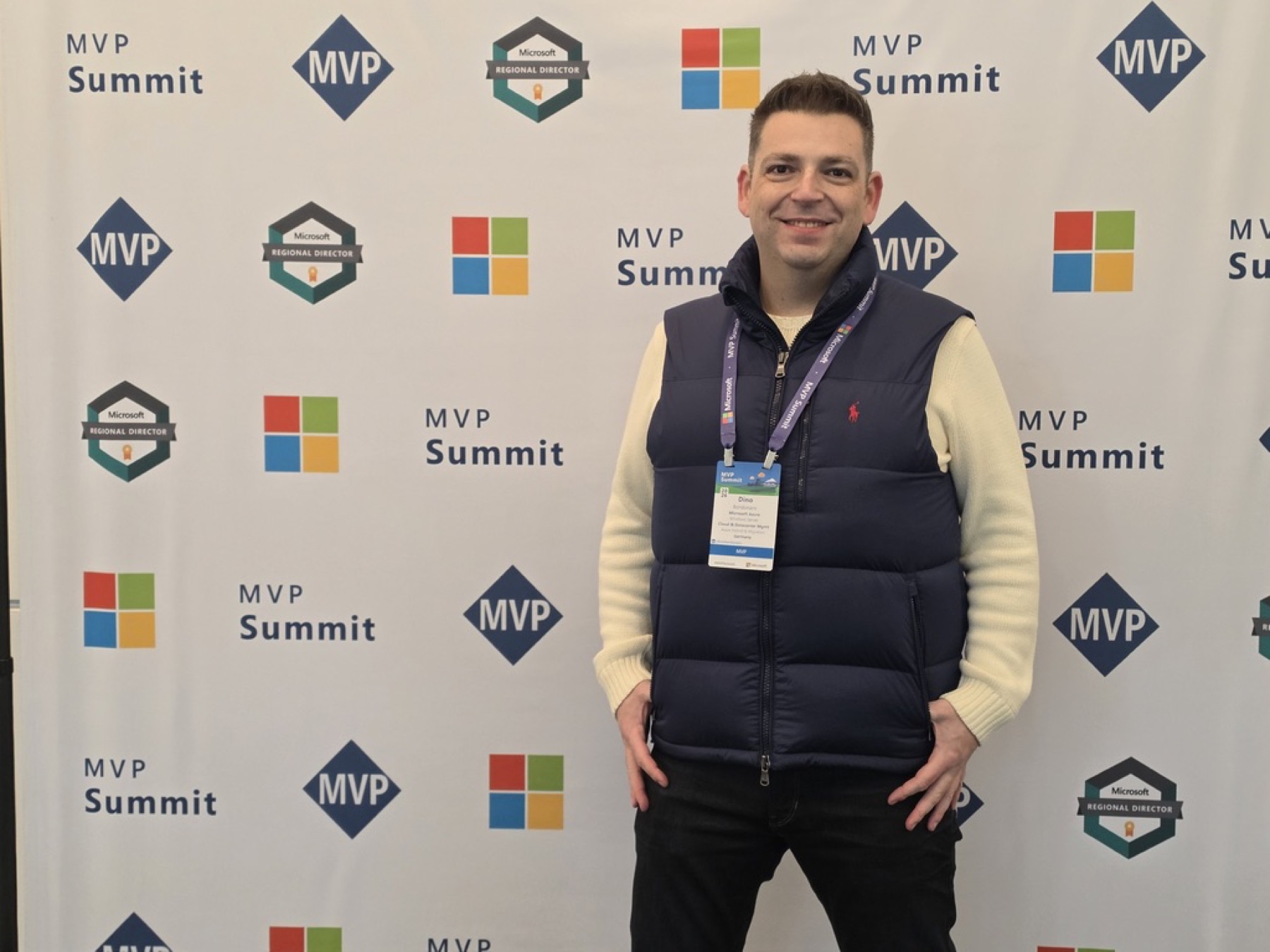
I have known many of the people I work with today for almost a decade. We do not only meet in projects. We travel together to the MVP Summit in Redmond or Microsoft Ignite, hold our Alliance get-togethers twice a year and occasionally spend time together away from technology.

Those shared journeys are more than good memories. They explain why our collaboration works differently under pressure.

My role remains clear: I stand at the intersection of business, architecture and operations. My network adds depth where additional expertise matters. Responsibility can be distributed. A sense of ownership cannot.

Dino between an early PC, modem, server racks and his sticker-covered laptop in a photorealistic composition representing almost 30 years in IT.

FOR IT TEAMS

If you work in IT, I stay close to implementation instead of handing over a slide deck and disappearing.

FOR EXECUTIVES

If you carry executive responsibility, I never treat a critical project as a solo act. Behind me is a proven network of people who have already delivered together under pressure.

What trust changes in a real project

We know one another’s strengths. We can anticipate reactions before they are spoken. We respect different opinions and know when to give each other room or object decisively. Handoffs do not require long political loops. Problems are not thrown across organisational boundaries.

Friendship does not replace governance. Personal relationships do not replace sound architecture. And no serious architect promises a risk-free project.

But trust makes risks easier to raise early. Practised routines accelerate decisions. Direct relationships with Microsoft, Dell Technologies and other vendors help bring the right people together faster. Mutual respect prevents an escalation from becoming a search for someone to blame.

We do not fight one another over responsibility. We fight together for the customer’s outcome.

MY FLIGHT LOG

Between that first PC and today lie almost 30 years of IT.

This is not a complete CV. It is a map of the turning points where curiosity became craft, craft became operations and operations became responsibility.

  1. At 13 / 16Curiosity becomes a craftFirst IT job at 13, systems integration at 16, my first agency at 20.

    At 13, I first worked for an IT company. At 16, I started my path into systems integration. At 20, I founded my first web agency together with two partners.

  2. Early 2000sOur own internet, not a PowerPoint version of itPHP, SUSE Linux, a 10 Mbit/s leased line and up to 50 simultaneous ISDN dial-ins.

    Back then, the internet was not an invisible everyday utility. You could hear it.

    We wrote PHP, ran web hosting on SUSE Linux and had what felt like a formidable 10 Mbit/s dedicated line from Deutsche Telekom. Two S2M connections allowed up to 50 customers to dial into the internet via ISDN at the same time.

    Today, almost everyone carries more bandwidth in a pocket. Back then, those lines were infrastructure, business model and responsibility at once. If our systems failed, people did not get online. There was no spare cloud region to fail over to. We were the cloud, long before anyone called it that.

    Several chapters as an IT services provider followed: hospitality, cashless payments, traditional infrastructure and later medical IT. These were environments where technology was never an end in itself. When a till goes down at lunchtime or a medical organisation can no longer work, theory ends rather abruptly.

    Anyone who has sat in front of a system at night while others waited for an answer knows the moment: the presentation no longer matters, and neither does the title on the business card. Experience matters. Calm matters. And so does the willingness not to pass responsibility on to somebody else.

    That is still where I feel at home.

  3. 2008 - 2014A restart and real responsibilityALTEMO, then BORDONARO IT: medical IT and our own Microsoft-based cloud platform.

    After the market crash of 2008 and 2009, I built a new IT services company under the name ALTEMO. In 2014, it became BORDONARO IT GmbH & Co. KG.

    We focused on building and operating reliable IT infrastructure for small and mid-sized businesses, especially for practices, outpatient medical care centres and hospitals. At the same time, we developed a Microsoft-based cloud platform on which customers could outsource their systems and consume infrastructure as a service.

    That sounds ordinary today. At the time, it meant trusting a comparatively small IT provider with the core of your IT. We had to earn that trust again every day: through sound architecture, dependable operations and the certainty that the person answering the phone at night already knew the system.

    The business grew successfully. Yet my technical curiosity kept pulling me in another direction. While my team ran the traditional IT services business, I spent more and more time with Azure, data centres and the question of how to combine the best qualities of public cloud with local control, sovereignty and real operational accountability.

  4. 2017Stay with what was safe, or follow what still excited me.From cloud sceptic to operator, and the turning point before Microsoft Inspire in Las Vegas.

    From cloud sceptic to operator

    I was not always a cloud enthusiast. Data protection, control and the question of whom I could trust with critical systems mattered to me early on. I did not change my mind because of a keynote. I changed it because I operated, tested and saw what worked, and what did not.

    My Azure Hybrid journey began when Azure Stack was still a Technical Preview and hardly anyone knew whether it would ever become a viable product.

    The idea immediately fascinated me: Microsoft cloud technology running not only in Amsterdam or Dublin, but under control in your own data centre, at the edge or with a trusted provider.

    There were few courses and even fewer people with genuine project experience. That left the method that has followed me since childhood: try, fail, read the logs, start again, and keep drilling until the system gives up its secrets.

    Technical programmes, hardware partners and joint testing created direct exchanges with Microsoft’s product groups. “It does not work” became a reproducible defect. A defect became logs, a concrete improvement proposal or sometimes even a mock-up of how it could work better.

    Influence on product engineering is not created by being loud. It is created by dependable feedback from the real world.

    That is also how my network grew: not by collecting business cards, but through thousands of hours in labs, shared projects, candid arguments and situations in which we had to find a solution together.

    The turning point in Las Vegas

    My company was doing well. Thirteen people carried responsibility for our customers. From the outside, there was no sensible reason to question anything.

    But I knew I could not spend another 25 or 30 years doing something that no longer made me curious every morning.

    Before Microsoft Inspire 2017 in Las Vegas, I made a deal with myself: either I would come home inspired, or I would have to reconsider where I was heading.

    I returned with a goal that sounded rather excessive at the time. I did not merely want to know Azure Stack. I wanted to become one of the people who truly understood it, operated it under real conditions and helped make it better.

    There was no grand shortcut. The path consisted of product nights, failed attempts, thousands of test hours, honest feedback and people who eventually stopped being mere partners or contacts.

    Partners and contacts became friends.

  5. COVIDThe stress testAzure migrations for tens of thousands of users, later recalibrated as Azure Hybrid.

    When entire workforces could no longer go to the office during COVID, cloud strategy suddenly became business survival.

    Together with long-standing partners, we helped move workplaces and applications for tens of thousands of users across multiple customer environments towards Microsoft Azure. We worked days and nights so organisations could remain operational and people could continue working from home.

    Many of those architectures were later recalibrated. Workloads moved back into hybrid models using Azure Stack Hub, Azure Stack HCI and now Azure Local, not as a retreat from cloud, but as a more mature decision about sovereignty, cost, latency, control and operational capability.

    Those years were a technical stress test. More importantly, they stress-tested people, relationships and ways of working.

    We learned how each person decides under pressure. Who stays calm. Who notices the detail others miss. Who opens an escalation path. Who objects when the easier decision is the wrong one. And who stays at night until the system can carry the load again.

    That experience does not appear in a partner brochure. It cannot be manufactured in a workshop.

  6. 2022 to todayIn 2022 I sold my company. But not my drive.Asset deal with Medialine AG, three years in the group, reorientation and a deliberate restart with the lab, Azure Arc and sovereign AI.

    On 1 January 2022, I sold the operating IT services business to Medialine AG in an asset deal and supported the transition for the following three years.

    That was not an exit from technology. It was a deliberate decision to move closer again to what drives me: understanding complex infrastructure, trying new technology early and building solutions that do more than look good on a slide.

    Letting go, learning, building again

    The step was part of a phase in which I had to reorder my life, my health and my business. After years of carrying responsibility, letting go was not a defeat. It was architecture work on my own life.

    For the following three years I worked inside the Medialine Group, first as Team Lead Azure and later as Lead Architect Microsoft Multicloud Solutions. I learned how architecture scales in a group, where handovers fail and why a good technical decision only becomes valuable once teams carry it together.

    Health was no side note during that time. Several major surgeries and long months in hospital changed my everyday life and my perspective. I am not telling this as a hero story. It explains why I now decide more deliberately what I work on and with whom.

    What remained was curiosity. I rebuilt my lab, went deeper into Azure Local and Azure Arc, and entered AI where it gets genuinely hard: sovereign, private and, where needed, air-gapped environments in which data, operations and models stay under your own control.

    That is my chapter today. Not a comeback and not a hero's journey. A deliberate restart with almost 30 years of experience, a bigger lab, a stronger network and exactly the question everything started with: how does this really work?

Tools can be bought. Trust has to be built.

You can license tools, document processes and place partner logos on a website. None of that creates a team.

Trust is built through shared projects, candid disagreement and the nights when everyone stays until the system is stable again.

You cannot copy that quickly: how a team communicates when things become serious, how fast it translates between architecture, operations, vendors and management, how confidently it objects and how reliably it stays together when a planned project day becomes a long night.

Perhaps that is my real work: connecting people, technology and responsibility until complexity becomes something others can trust.

Not because everything always goes smoothly. Because you know who is standing beside you when it does not.

If you recognise yourself in part of this story, we probably share something: the urge to understand how things really work. Perhaps our paths will cross one day, in a data centre, a lab, on a stage or somewhere between Frankfurt and Redmond.

WHAT I AM BUILDING NOW

Azure Arc is not the extra. It is the control plane that holds hybrid together.

Hybrid rarely fails because a VM will not start. It fails on multiple inventories, separate policies, blind spots and unclear responsibility. Azure Arc projects servers, Kubernetes clusters and other resources outside Azure into a single Azure control plane. That does not make governance, security, monitoring and operations automatically easy. But it gives them a common language.

That is exactly where I work today: on Azure Local, Azure Arc and sovereign private cloud and AI environments. In my own lab I do not just test whether a demo works. I want to know what survives separated networks, strict data sovereignty, real update paths and operations at 3:07 a.m.

Testing early does not only produce answers. It produces things that can make products better.

MICROSOFT MOST VALUABLE PROFESSIONAL

I don’t share because I’m an MVP.I’m an MVP because I share!

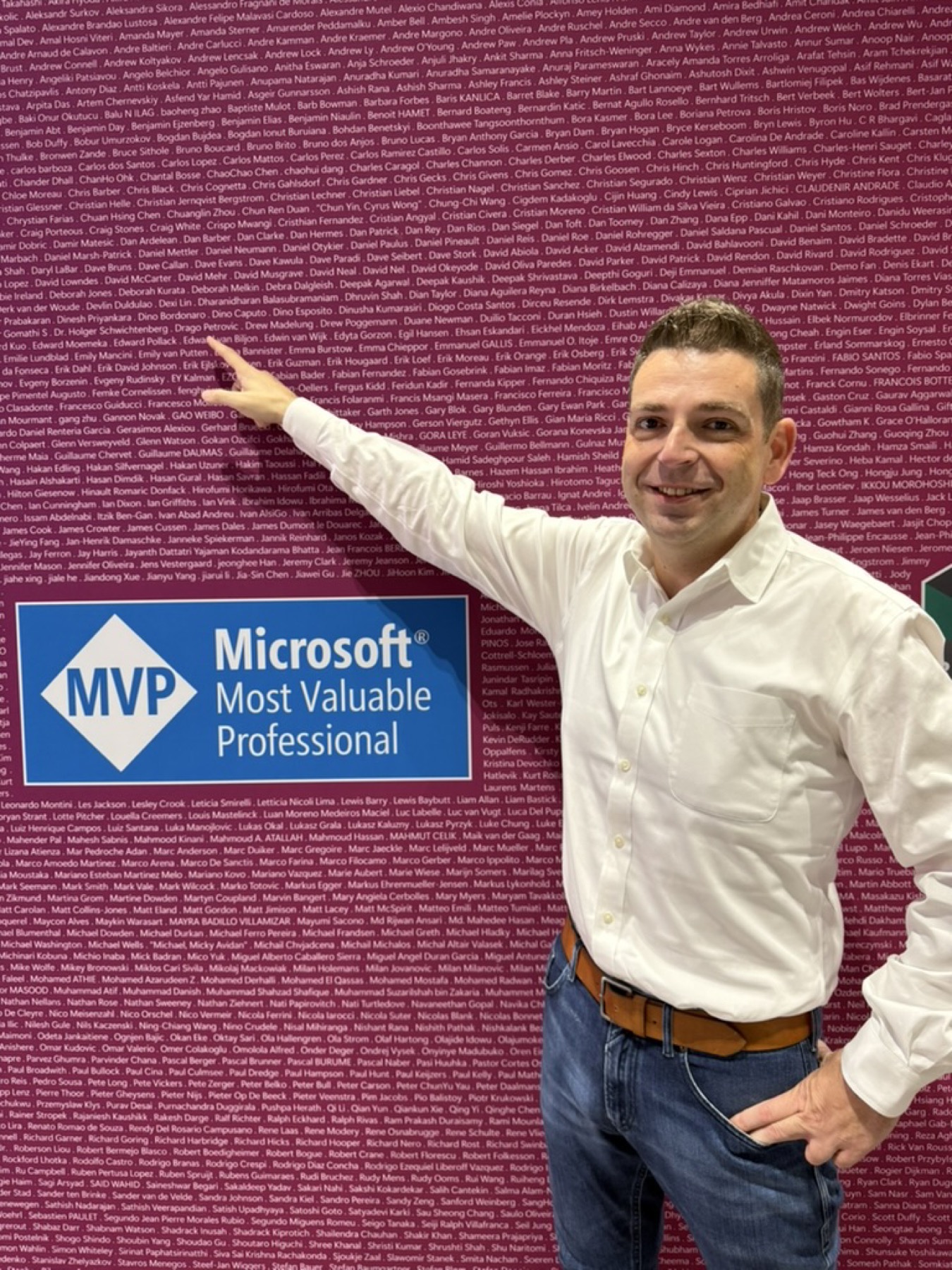
The Microsoft MVP Award is not an exam, a certification, or a sales badge. Microsoft uses it to recognise independent community leaders who share technical knowledge, help other people grow, and bring real-world experience back to the product teams.

Microsoft has reviewed my contribution every year since 2019. On 15 July 2026, Microsoft renewed my award for an eighth consecutive year. My award categories are Microsoft Azure and Cloud and Datacenter Management. My technology areas are Azure Hybrid & Migration and Windows Server.

It does not mean I speak for Microsoft. It means I can bring experience from real projects, the lab and the community directly into conversations with Microsoft product teams, and use that proximity to share what I learn rather than keep it to myself.

Four ways I contribute

Product feedback

Private previews, technical reviews, and direct conversations with the people building Microsoft products. Much of that remains under NDA. Only what I am allowed to share becomes public.

Speaking

Conferences, panels, executive briefings, and technical deep dives, in German and English, for small expert groups and large audiences.

Community building

Connecting people, sharing experience, taking questions seriously, and opening doors that previously felt closed.

Reality checks

Going beyond the click-through demo and testing new technology with hardware, dependencies, failure, and the uncomfortable questions polished presentations leave out.

MVP is not a destination you reach once. It is a responsibility you have to earn again every year.

Microsoft Most Valuable ProfessionalDino BordonaroDino Bordonaro is an independent Microsoft MVP, not a Microsoft employee or spokesperson.

VERIFIABLE, NOT INFLATED

The work came first. The recognition followed.

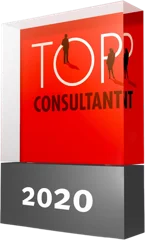
These awards are not here as decoration. They show that curiosity has produced verifiable impact over time. The Microsoft MVP Award recognises me as an individual. TOP CONSULTANT and TOP 100 recognised the BORDONARO IT company I built.

PERSONAL · MICROSOFT

8 consecutive Microsoft MVP awards. Recognised again every year.

Since 2019, Microsoft has renewed my MVP Award year after year for my contributions to technical communities and my exchange with product teams. The current award period runs from 15 July 2026 to 15 July 2027.

Award categories:
Microsoft Azure · Cloud and Datacenter Management
Technology Areas:
Azure Hybrid & Migration · Windows Server
Illustrative rendering: Dino Bordonaro’s framed 2026 Microsoft MVP certificate next to the MVP trophy with eight annual stones from 2019-2020 to 2026-2027 and a blue 5 Years separator.

From my entrepreneurial history

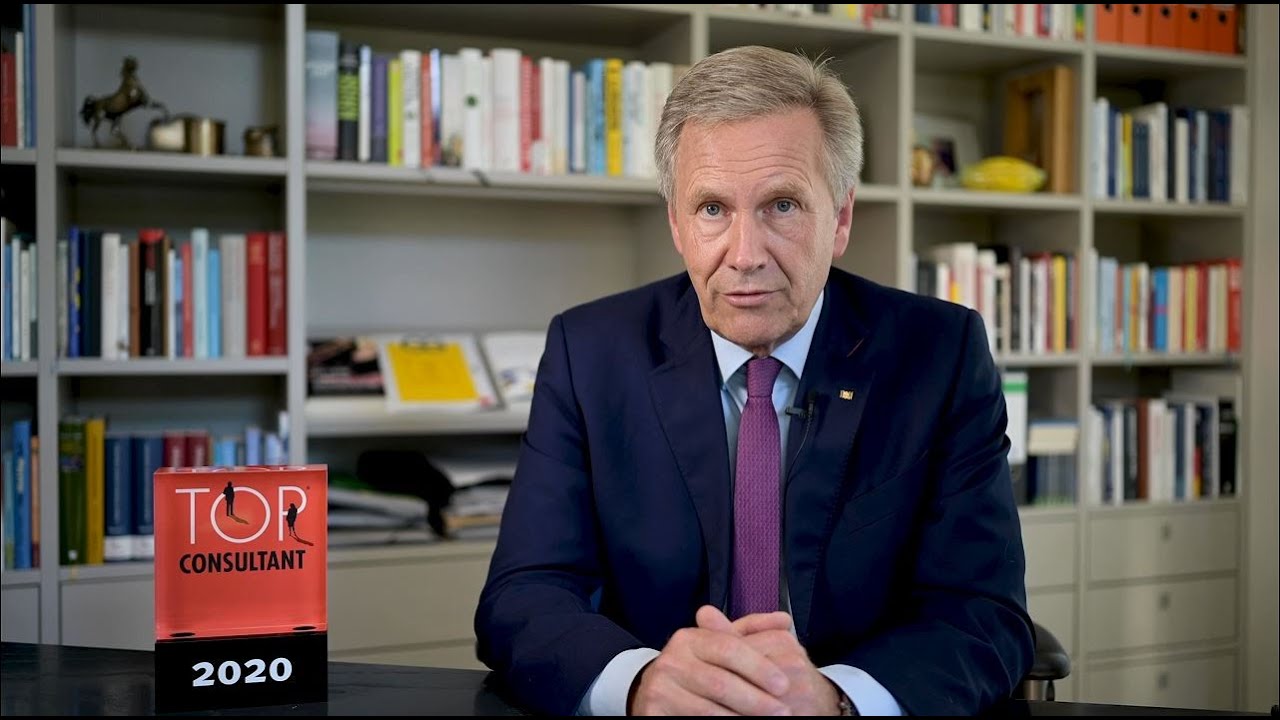
TOP CONSULTANT · 2020

Third place at TOP CONSULTANT.

BORDONARO IT GmbH & Co. KG placed third in Size Class A in 2020, among consulting firms with up to ten employees. The result was based on a scientifically designed reference-customer survey covering mid-market consulting quality, satisfaction and the impact of the engagement. Christian Wulff was the competition’s mentor.

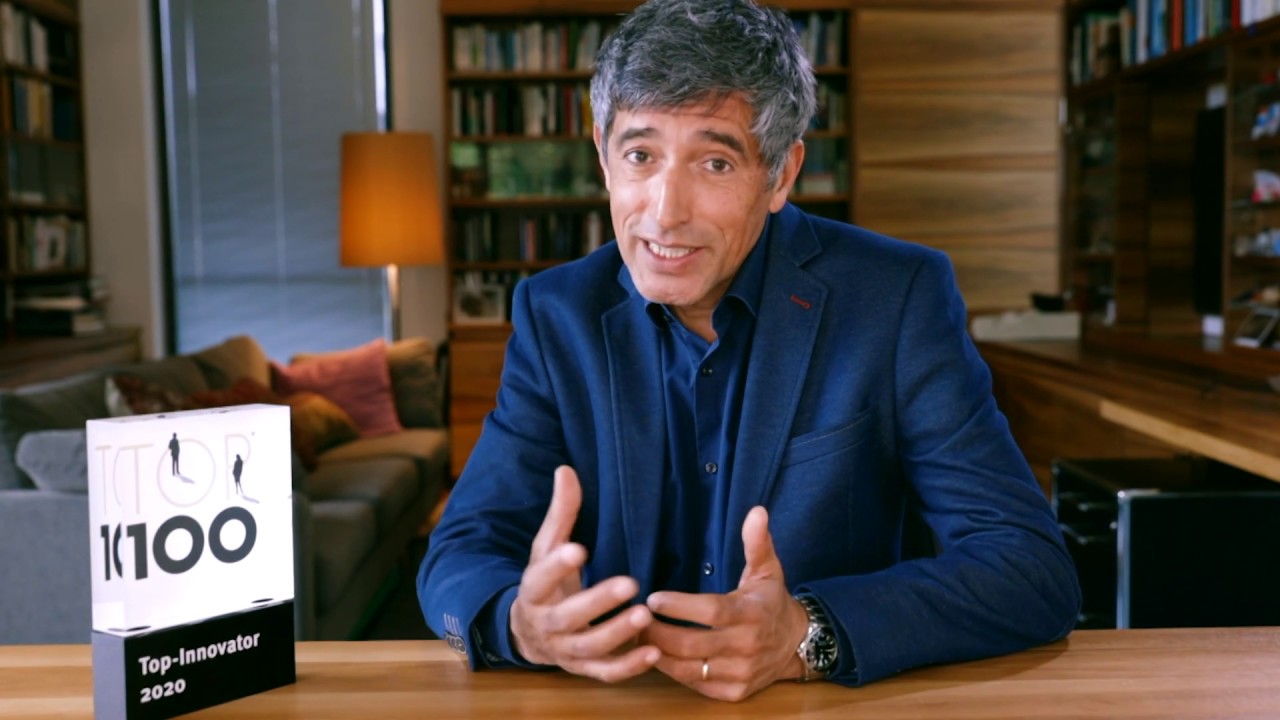
TOP 100 · 2019 AND 2020

Recognised twice as a top innovator.

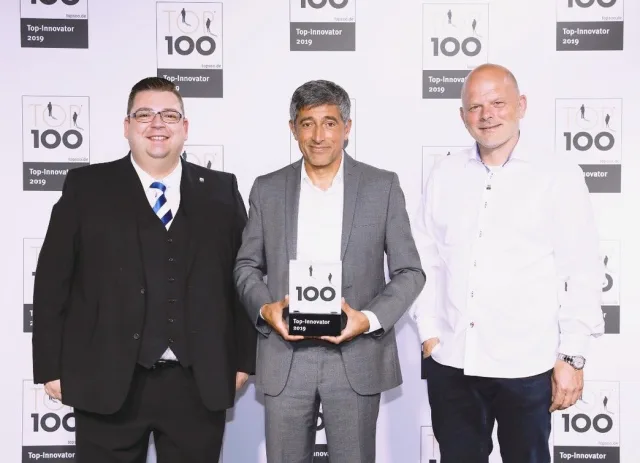
BORDONARO IT GmbH & Co. KG was recognised twice for particular innovative strength and above-average innovation success among German SMEs. Ranga Yogeshwar was the competition’s mentor at the time.

The trophies are milestones. The force behind them has always been the same: curiosity, people and the determination to make technology better.

Passion is personal. Evidence should be checkable.

These numbers do not replace the story. They show what that curiosity has produced over time.

consecutive Microsoft MVP awards
8x
MVP award categories
2
professionals trained
800+
Microsoft certifications
19
cores in my enterprise lab
2,516

Recognition

Microsoft Most Valuable ProfessionalTOP 100 Innovator trophyTop Consultant trophy
  • Microsoft Most Valuable Professional · every year since 2019
  • Microsoft Certified Trainer
  • TOP 100 Innovator 2019 and 2020
  • Top Consultant 2020

Not as a trophy cabinet, but as verifiable evidence of what curiosity, persistence and collaboration can produce.

PRACTICE BEFORE PROMISES

I teach what I have tested myself.

The confidence behind this page comes from real systems, real constraints and lessons that did not fit neatly on a slide.

Before I speak or teach about a technology, I want to have built, operated, pushed or repaired it in a real environment. Practice first. Explanation second.

FEEDBACK BEATS APPLAUSE

I don’t praise everything. That is the point.

Early access is not a VIP wristband. It is a responsibility.

When I work with Microsoft product groups, I do not bring a polished opinion. I bring real dependencies, operational limits, customer questions, and failure modes, the things that remain invisible inside a controlled demo but later determine trust, budget, and whether somebody sleeps through the night.

Sometimes my feedback is: this is excellent. Sometimes it is: nobody outside this room will operate it reliably like this. Both are valuable when they arrive early enough.

How I work

Understand early

Put roadmaps, previews, and architectural decisions into context before the market reduces them to buzzwords.

Break deliberately

Test networking, identity, updates, storage, governance, and recovery under conditions closer to production than to a demo.

Feed back precisely

Make observations reproducible and discuss them directly with engineering, product management, and fellow MVPs.

Share clearly

Translate what can be published into sessions, training, articles, and conversations that others can build on.

3 racks · 2,516 cores · 24 TB RAM · 3,400 TB storage · up to 200 Gb/s networking

What has to be precise in the lab is still allowed to feel alive on stage.

THREE SCENES INSTEAD OF A FEATURE LIST

Deep enough to read the log myself. Connected enough that the project never hangs on one person.

Breadth without depth is PowerPoint. Depth without translation stays in the lab. My value lies in the connection. And when a project needs more than one person, the real advantage begins: a network grown over almost ten years that does not need introductions in an emergency.

Working on Azure Stack systems in the lab

LAB, NIGHT AND OPERATIONS

Three racks, 2,516 cores and the question of what actually survives the update. In my own enterprise lab I break architectures deliberately, before a production system does it involuntarily.

See the lab specification
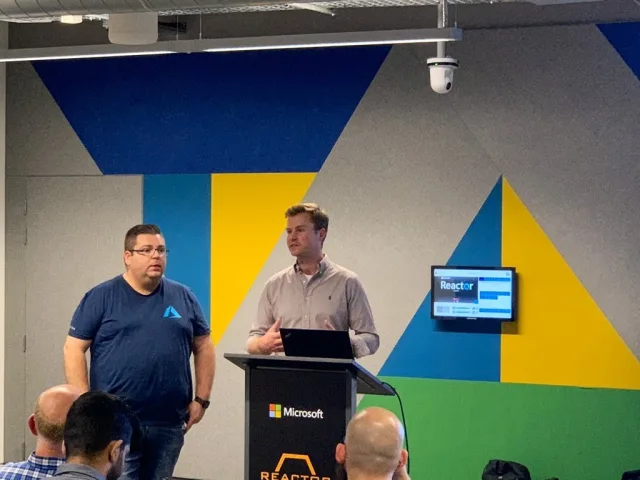
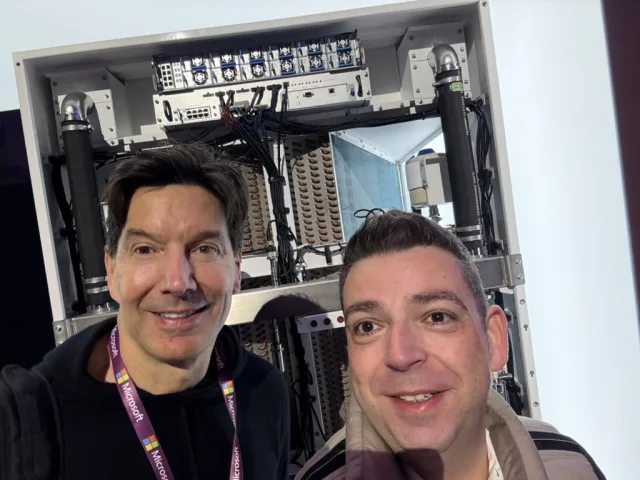
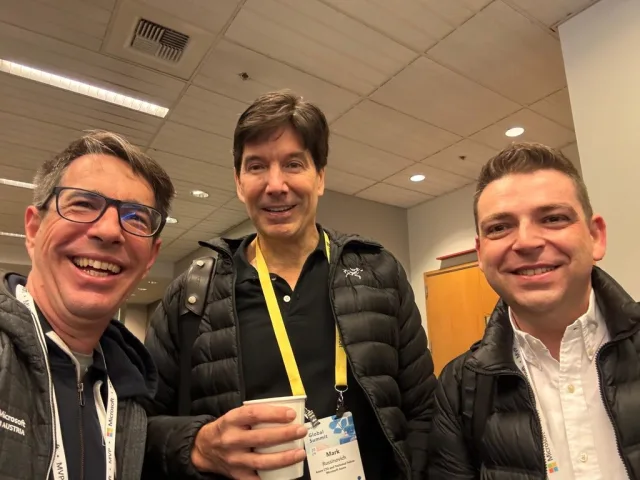
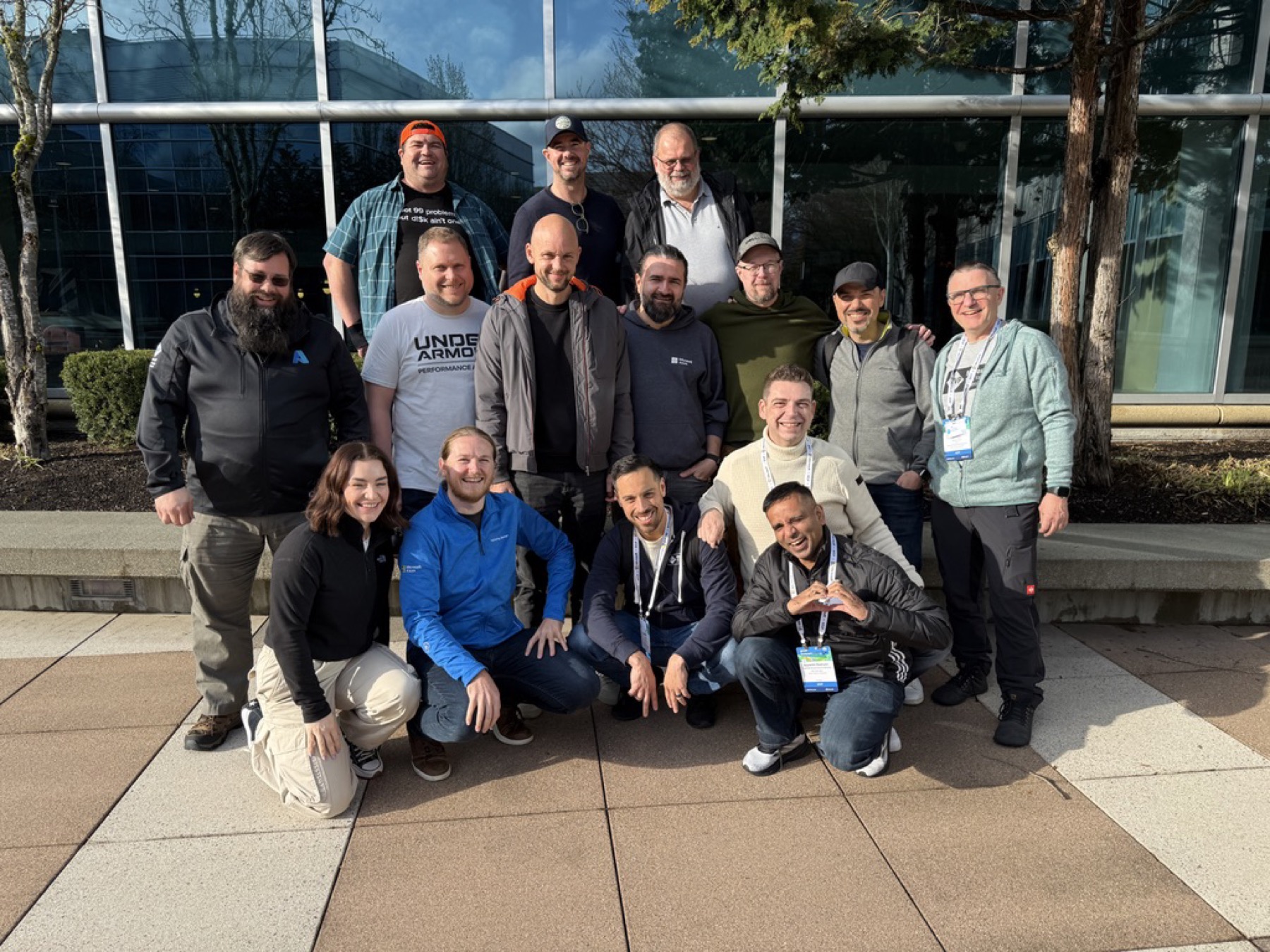
Technical roundtable with Microsoft colleagues, 2026

REDMOND, PRODUCT ENGINEERING AND MVP

Reproducible defects become logs, proposals and conversations with the product teams. That is how an „it does not work“ becomes a product that eventually does.

My MVP contribution
Dino explaining an architecture at a whiteboard

STAGE, COMMUNITY AND LEARNING

More than 800 trained professionals and sessions after which teams want to try things themselves. Knowledge only becomes valuable when others move forward with it.

Videos and sessions

Knowledge only becomes valuable when others move forward with it.

ON STAGE

Complexity is no excuse to be boring!

I love the moment when a room realizes that the complicated technology in front of them does not have to remain somebody else’s language.

A good session delivers more than correct slides. It gives people an image that stays with them, a question they carry home, and enough technical substance to do something differently the next morning.

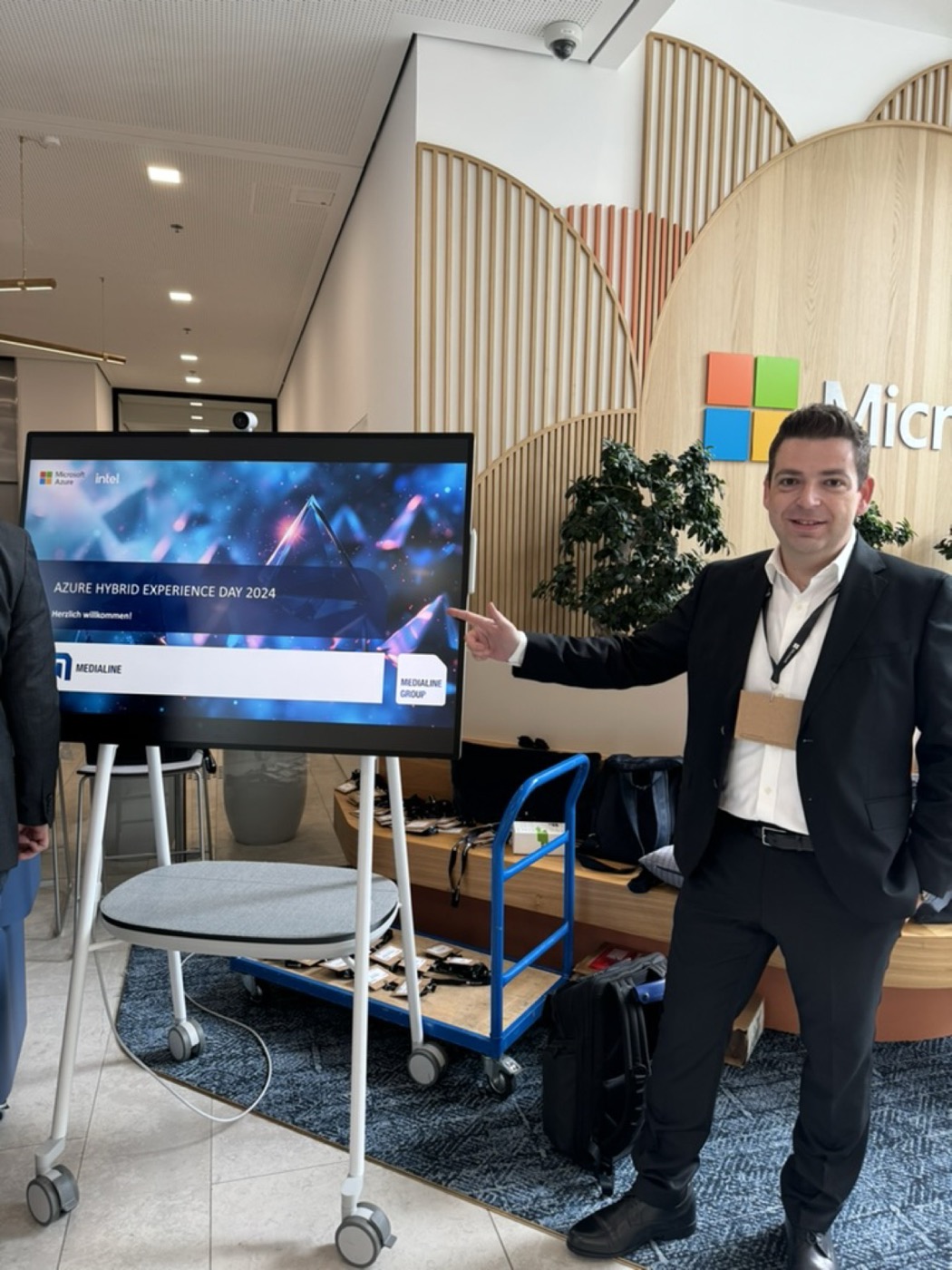
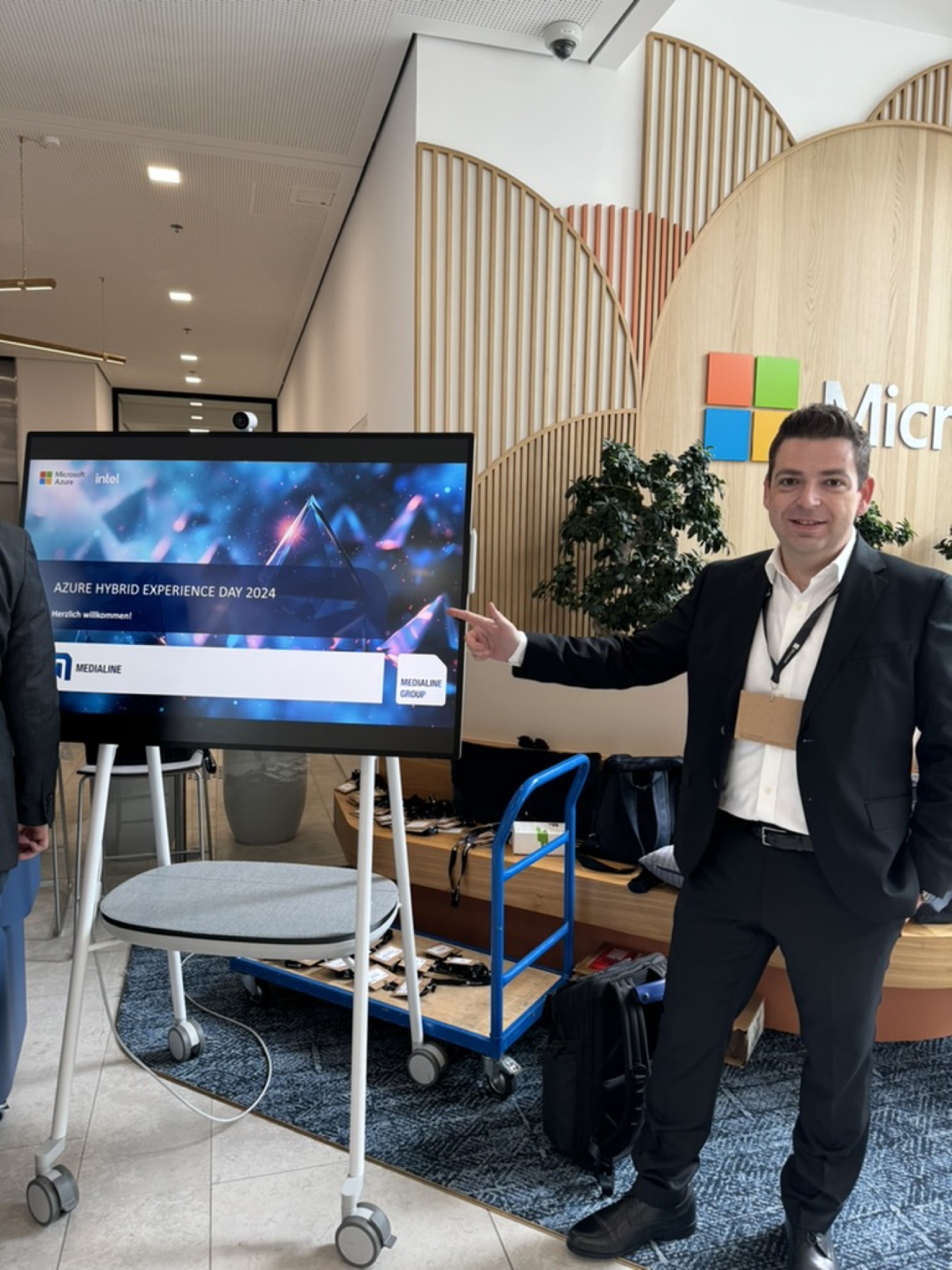
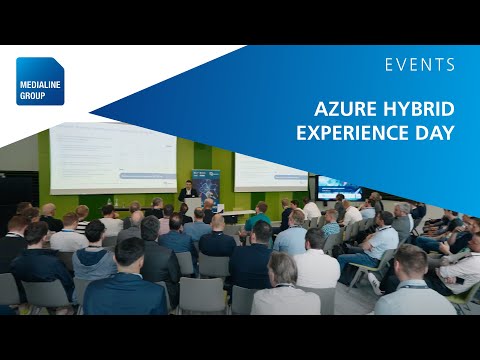
I speak in German and English, at conferences, partner events, panels, executive briefings, and formats such as the Azure Hybrid Experience Day I designed and hosted together with Microsoft.

Subjects I cannot stop talking about

  • Azure Hybrid, Azure Local, and Azure Arc
  • Sovereign cloud and sovereign AI
  • Datacenter architecture, operations, and disconnected environments
  • Product engineering between preview and production
  • Why every technical transformation is also a human story
  • What executives and platform teams need to understand about each other

800+ professionals · German and English · live and remote · Microsoft MVP · Microsoft Certified Trainer

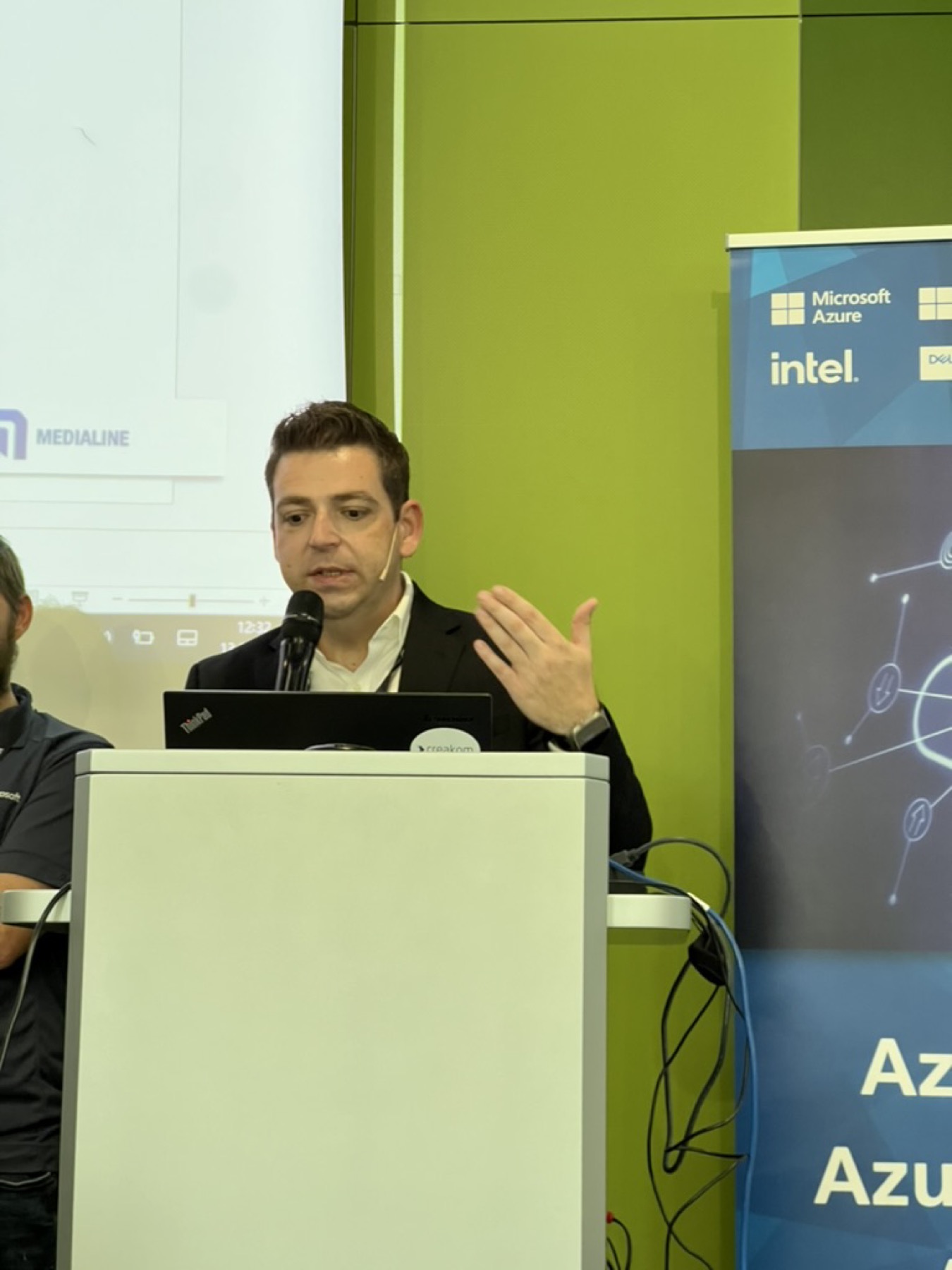
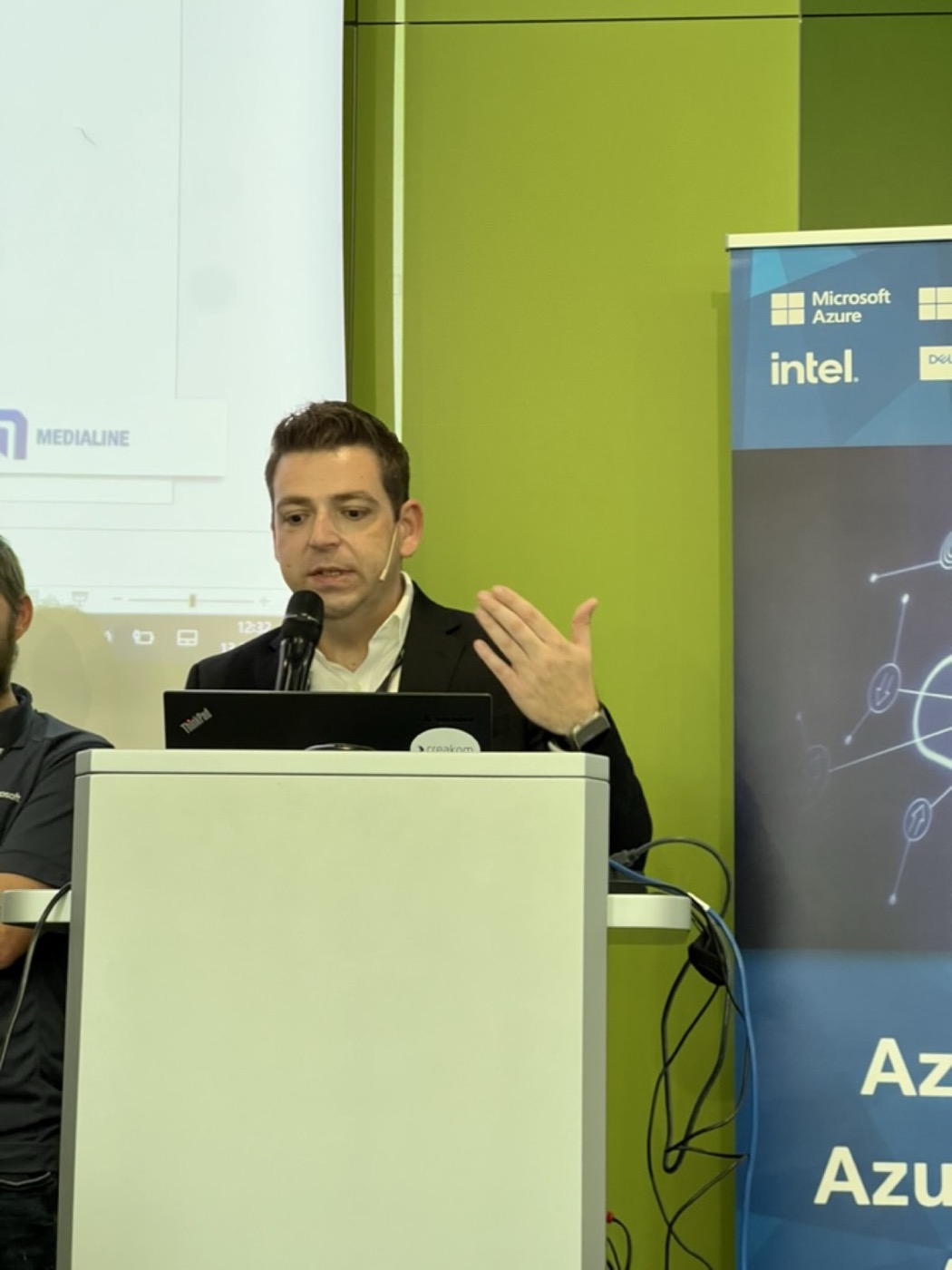
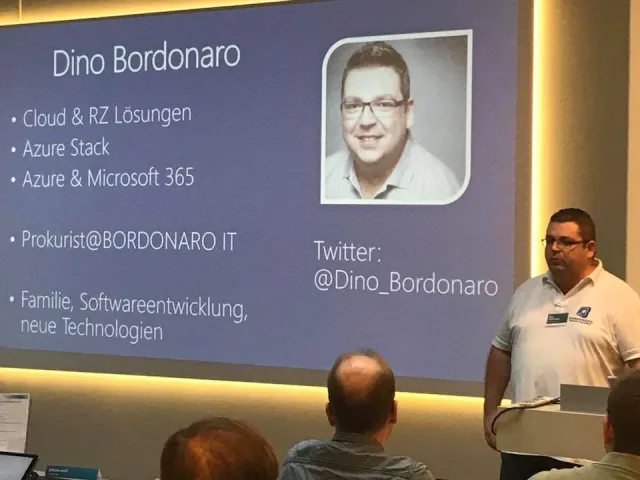
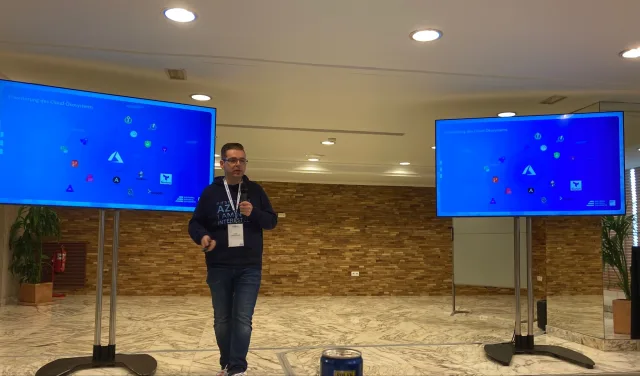
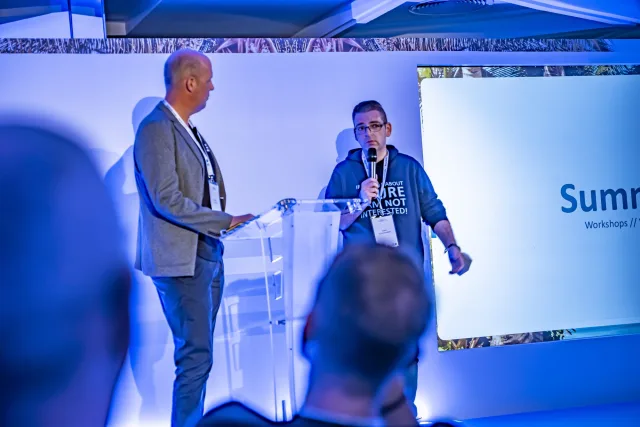
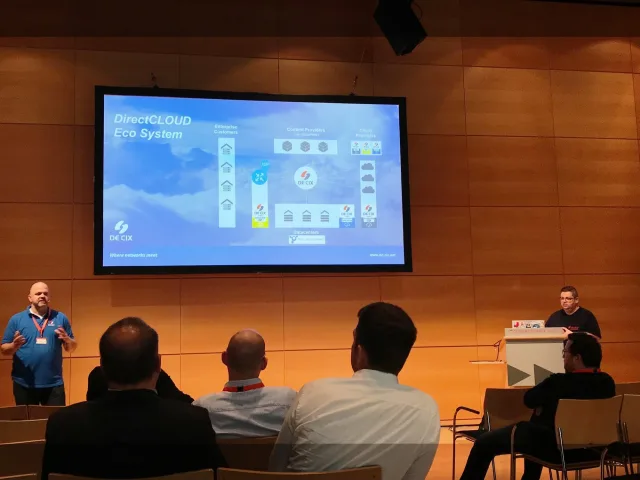
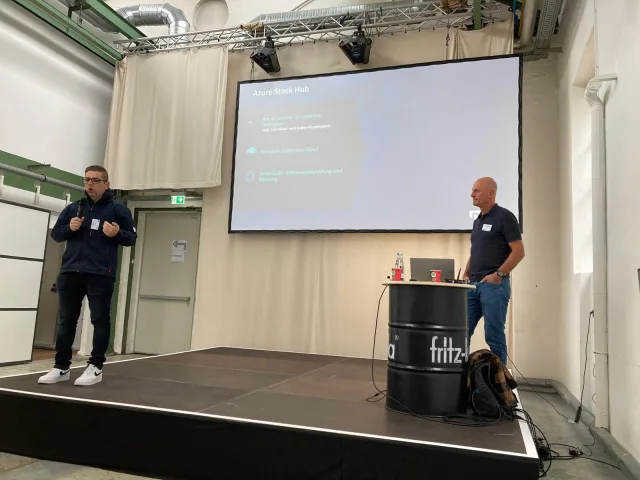
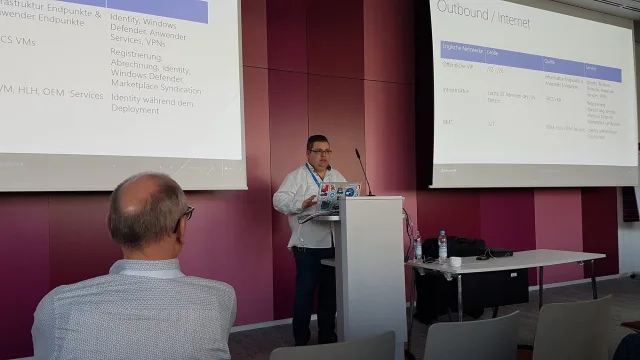
Dino Bordonaro presenting at a podium with a headset microphone, Microsoft Azure partner slide on screen
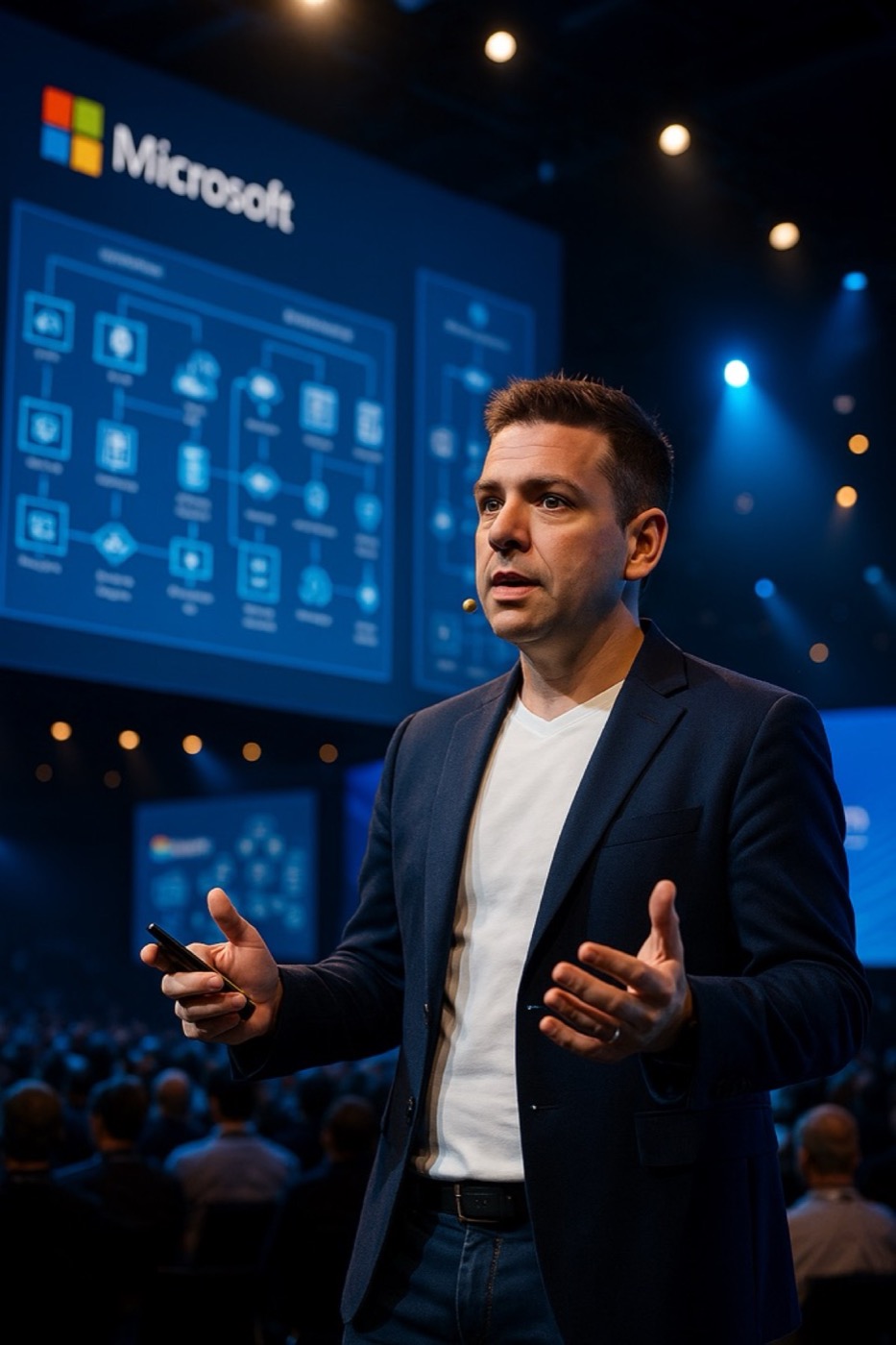
Dino Bordonaro on a large keynote stage with a Microsoft architecture slide behind him
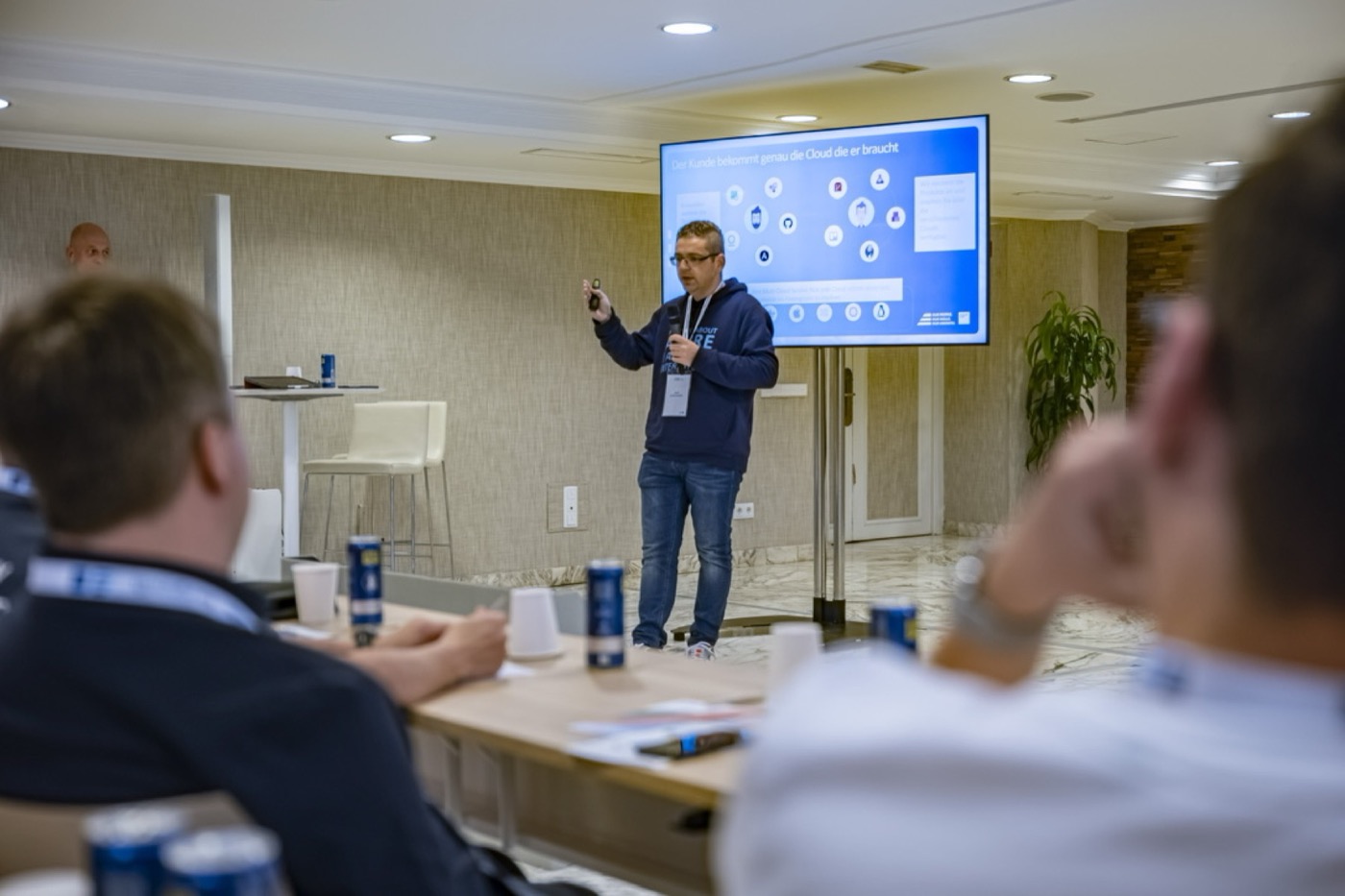
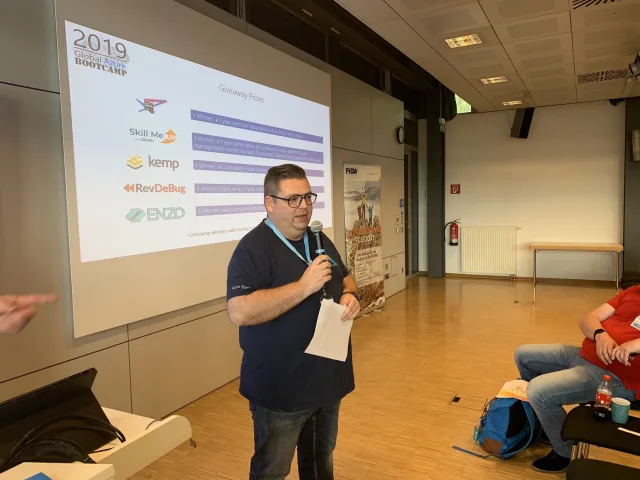
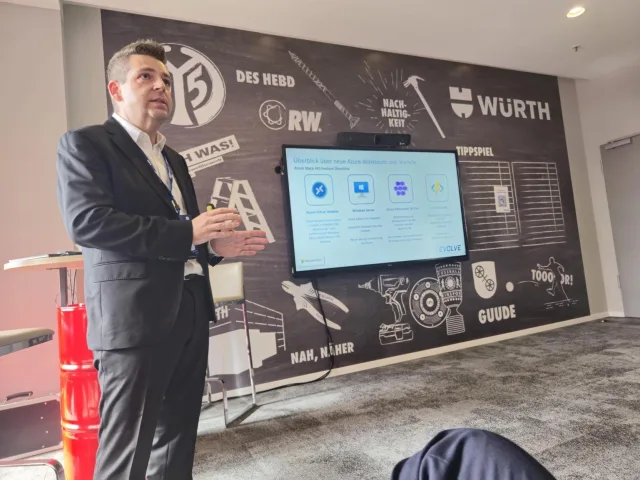
Dino Bordonaro presenting to a seated audience with microphone and clicker
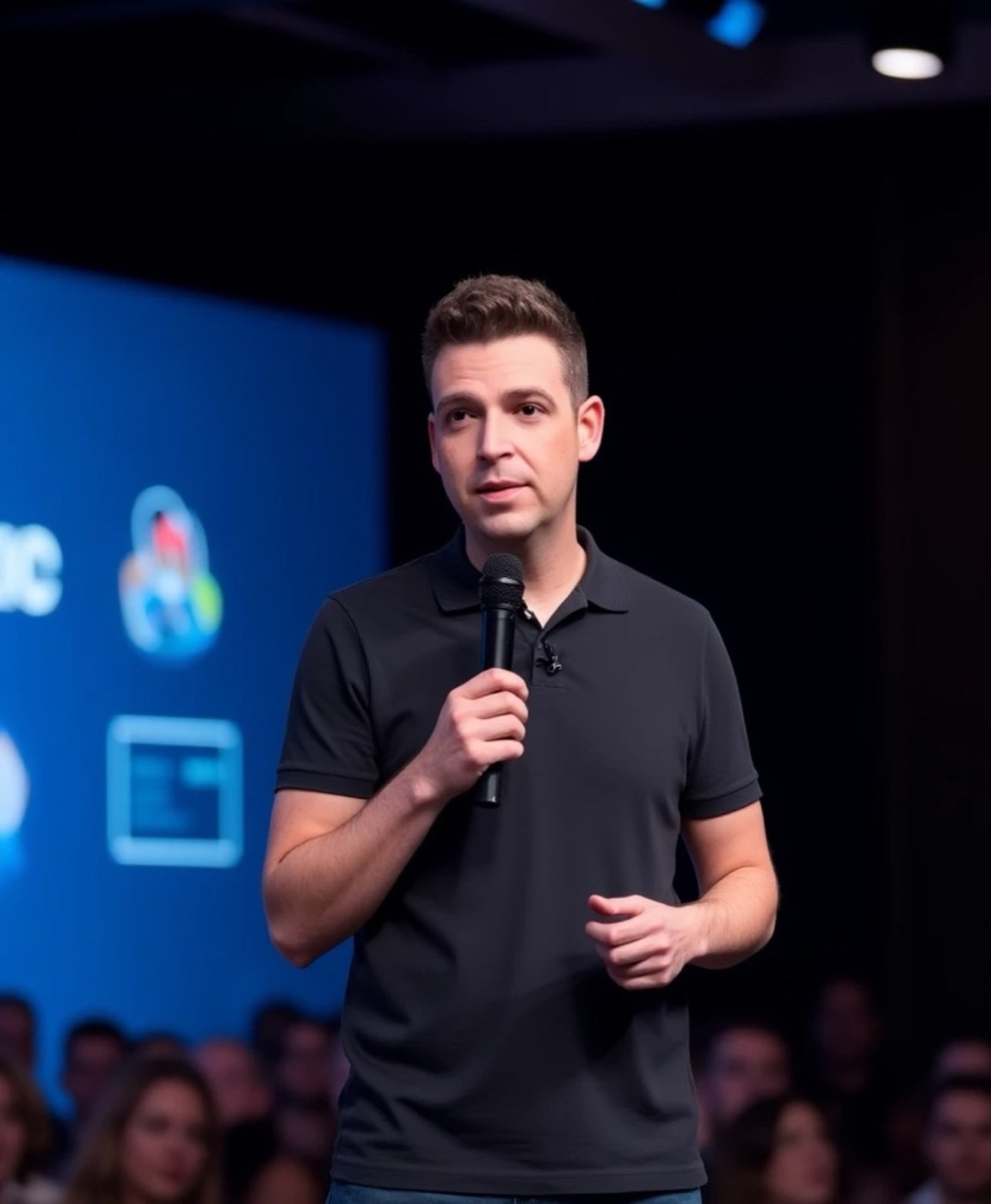
Dino Bordonaro with a handheld microphone on a keynote stage in front of a large blue screen
Live session, 2022
Panel moment, 2023
Technical session, 2023
Technical talk, 2024
Stage photos of Dino Bordonaro

HALL OF FAME

Not contacts. The people who stayed.

Technology is built with tools. Impact is built with people. Some of them have been beside me for years: in labs, on stages, in projects and through nights that lasted longer than planned.

Not a ranking. Not name-dropping. Moments with people who became trusted companions over the years.

TOP 100 award moment
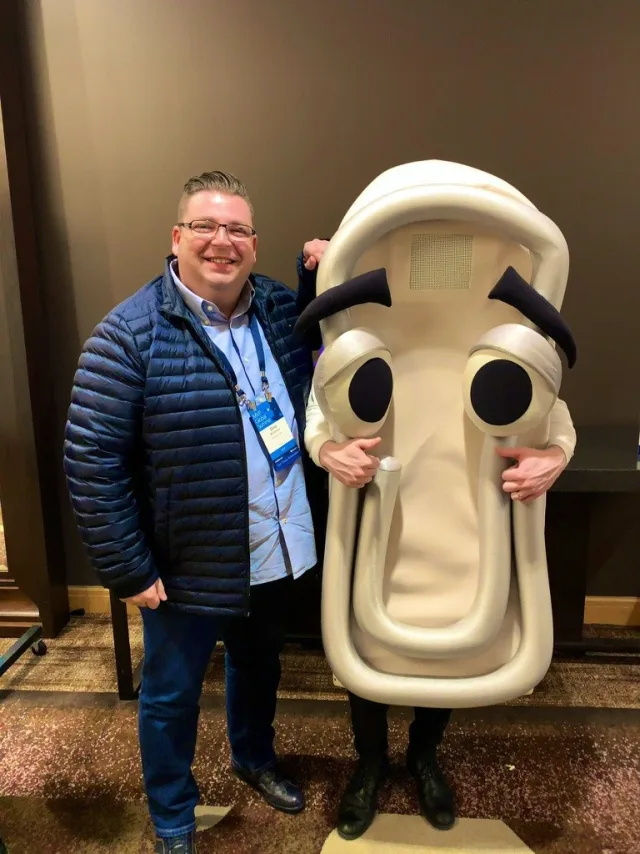
Moment with a Clippy figure at a Microsoft event
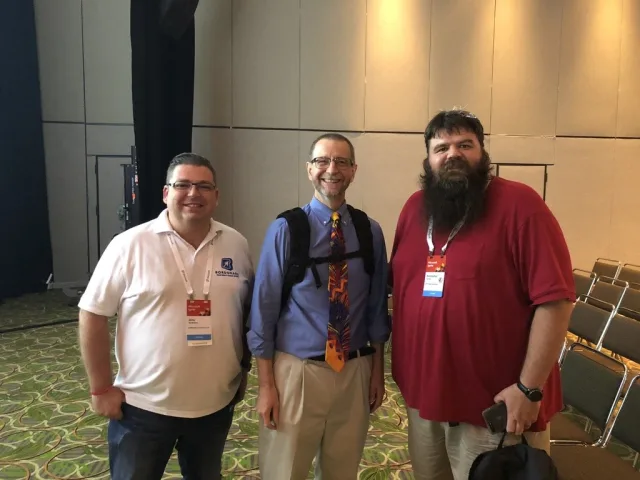
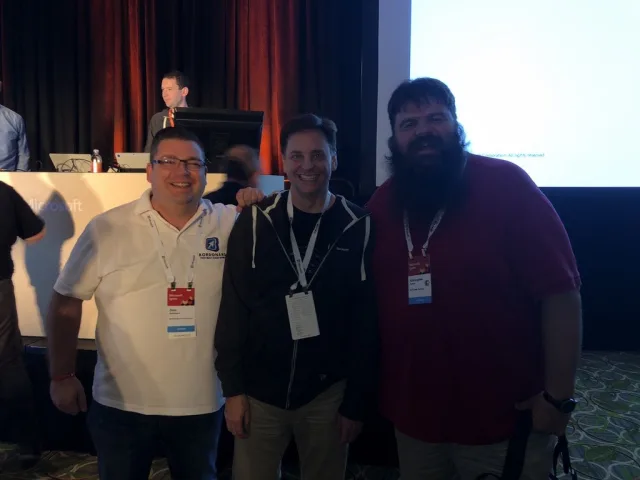
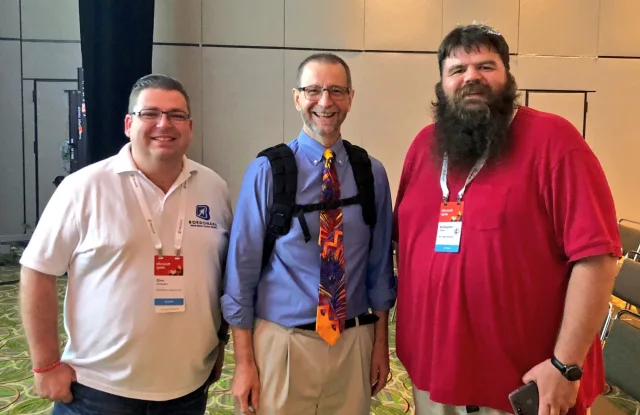
Community group moment
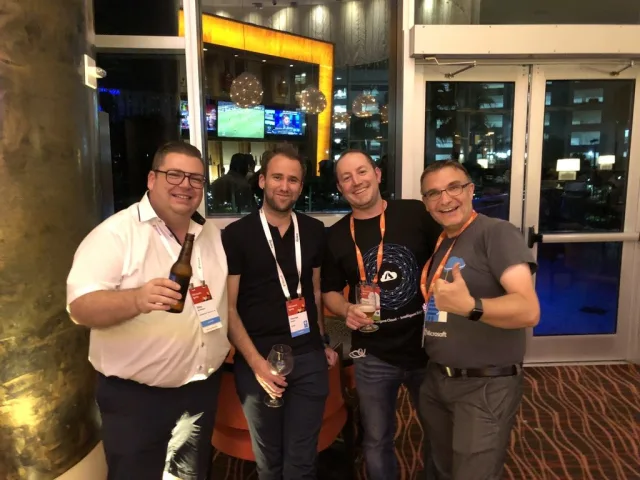
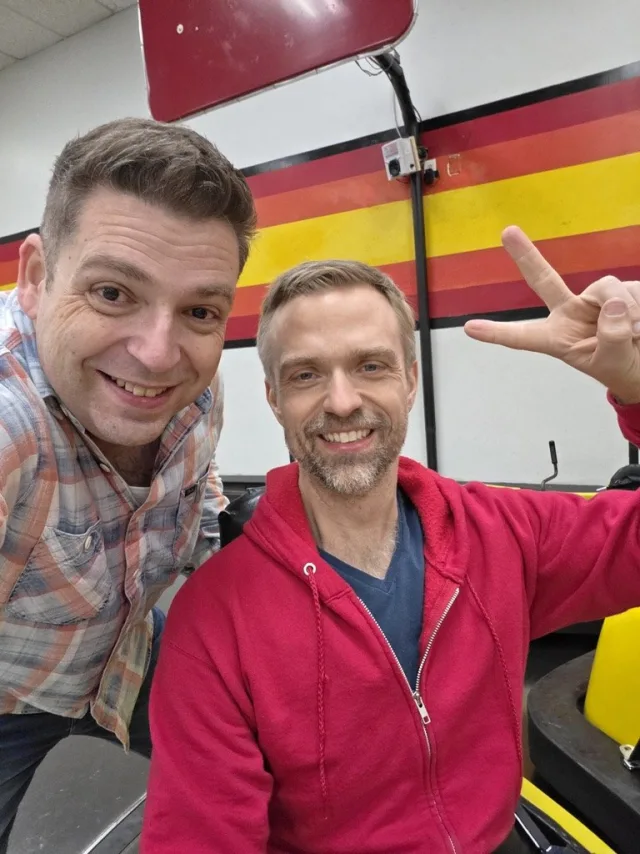
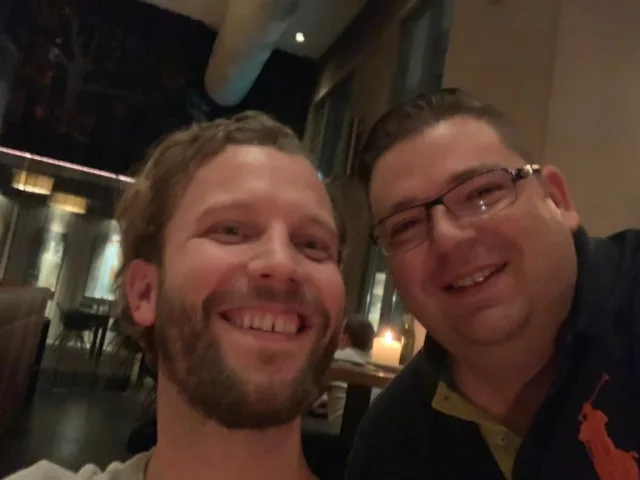
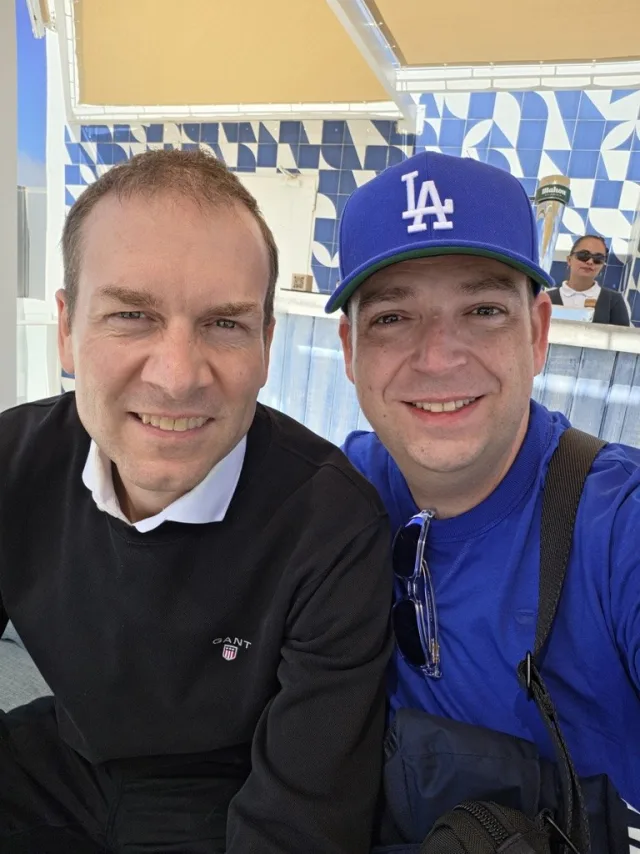
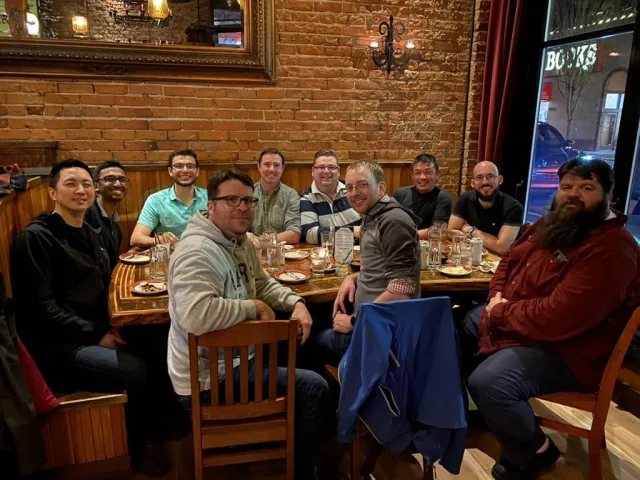
Dinner with long-time companions
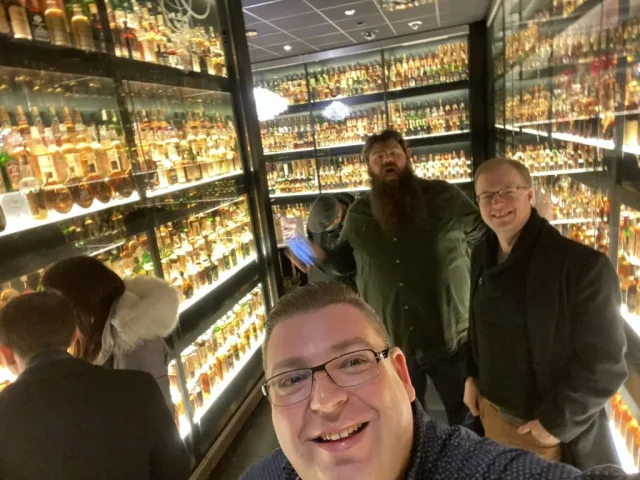
Shared moment in the datacenter
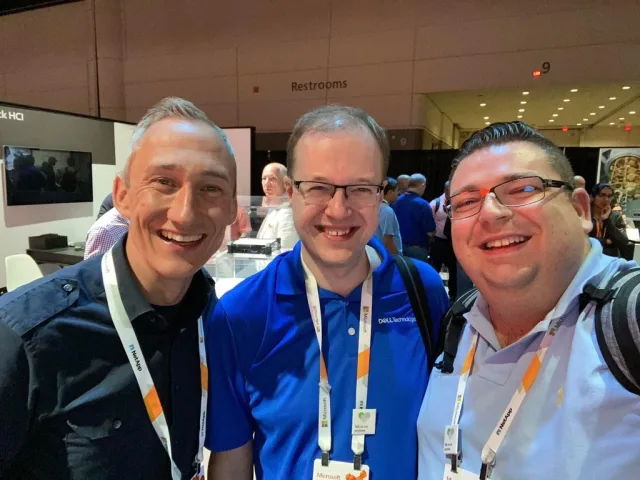
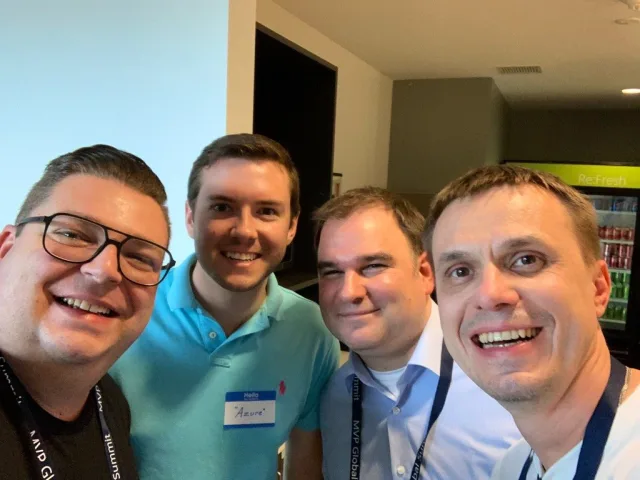
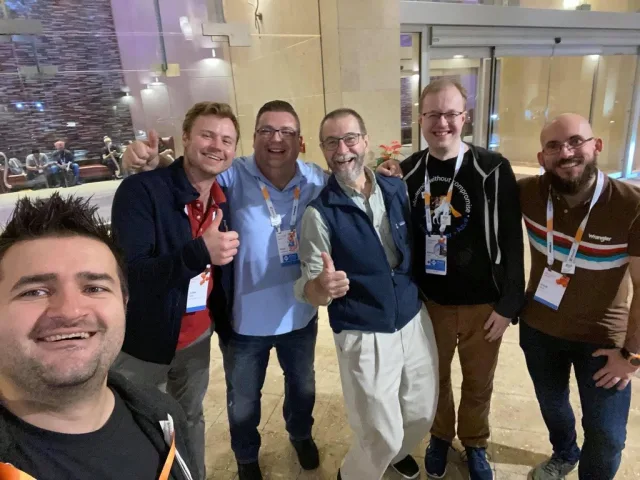
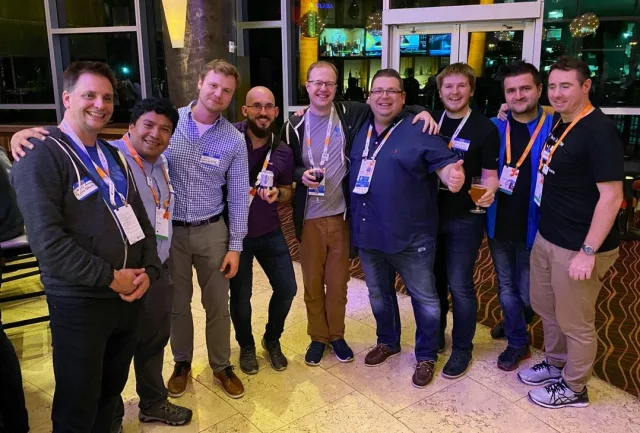
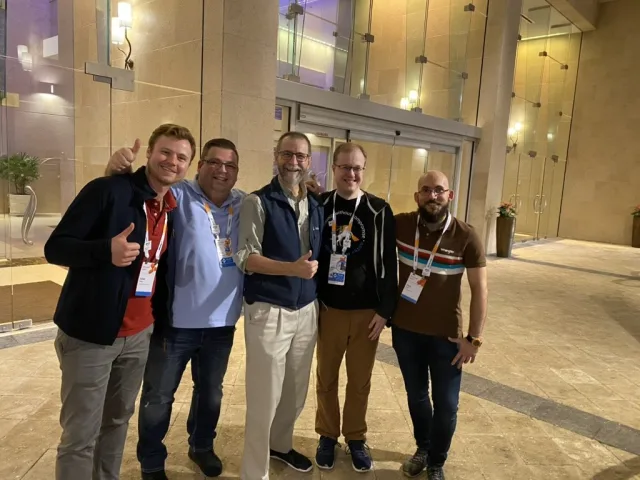
Conference group

COMMUNITY IS NOT AN AUDIENCE

The best ideas rarely happen alone.

At the MVP Summit in Redmond, at Microsoft Ignite, in user groups, at events, and in countless conversations, I meet people who do not treat technology as territory. They share, disagree, help, and build on each other’s work.

That is community to me: not a mailing list and not a follower count. It is a place where somebody can ask an honest question and leave with more possibilities than they had before.

Along the way, I have found friends, sparring partners, and some of the smartest people I know, across countries, companies, and disciplines, connected by the belief that knowledge gains value when it travels.

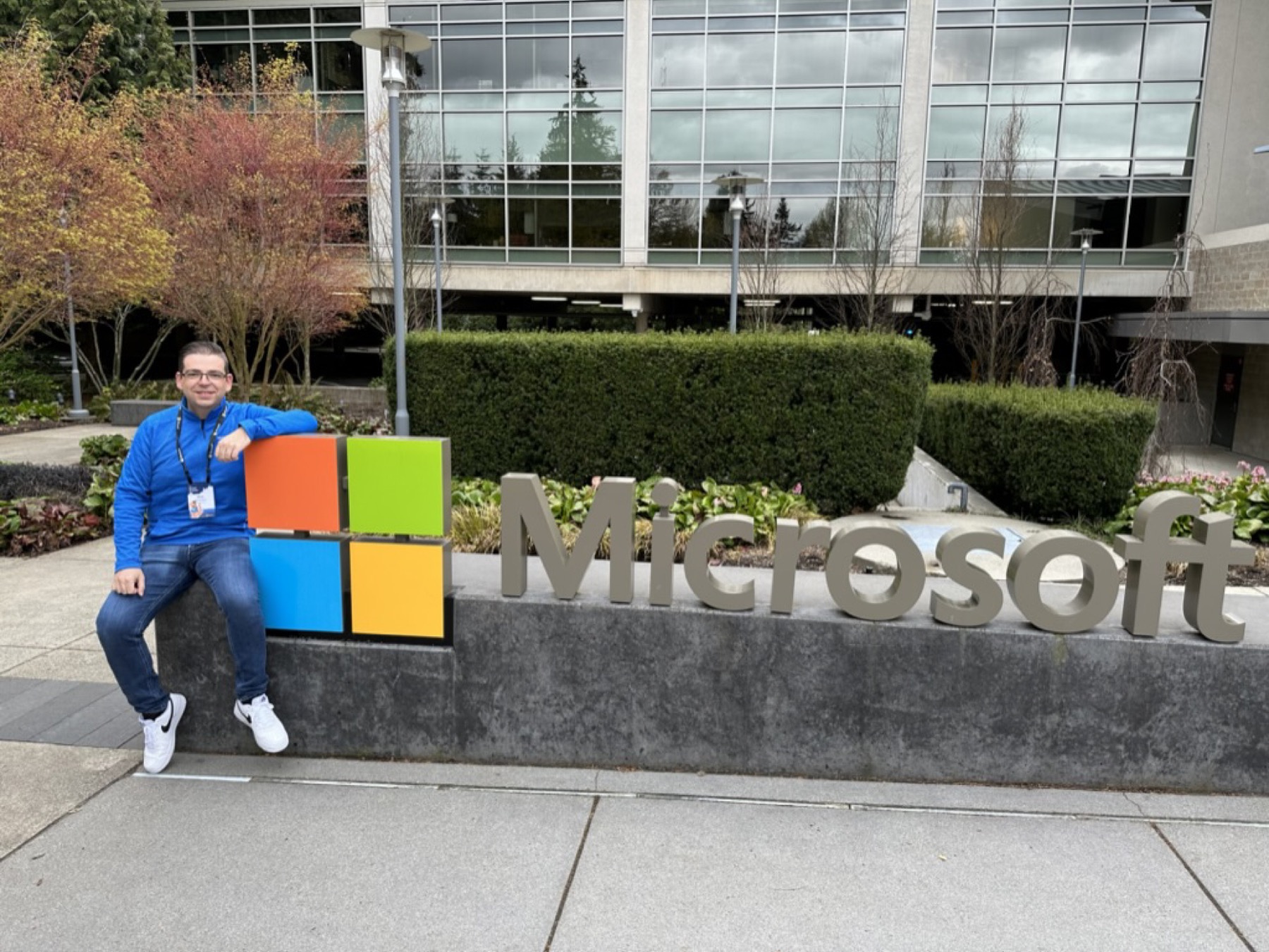
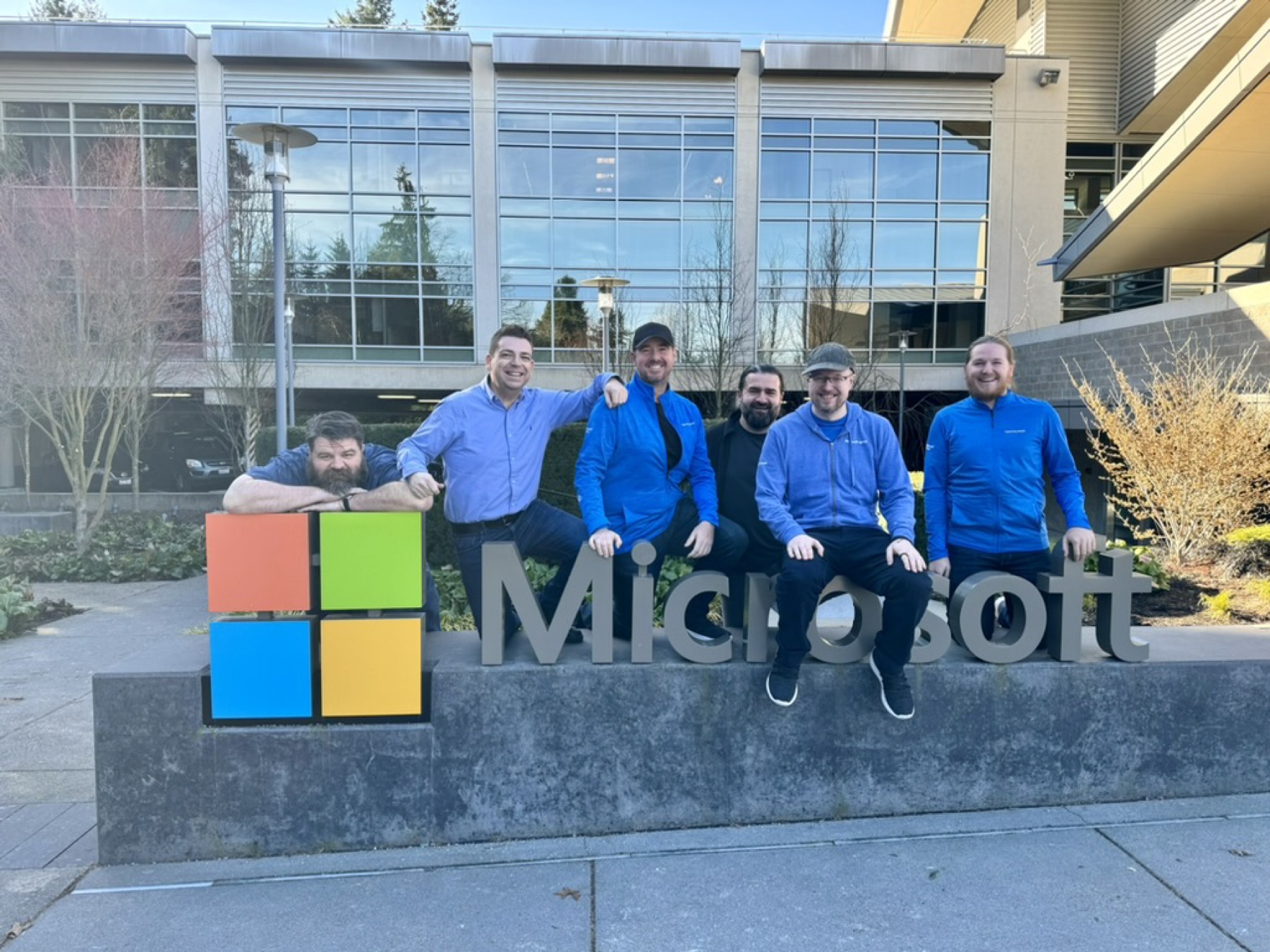
MVP Global Summit at the Microsoft campus in Redmond
Microsoft campus, Redmond
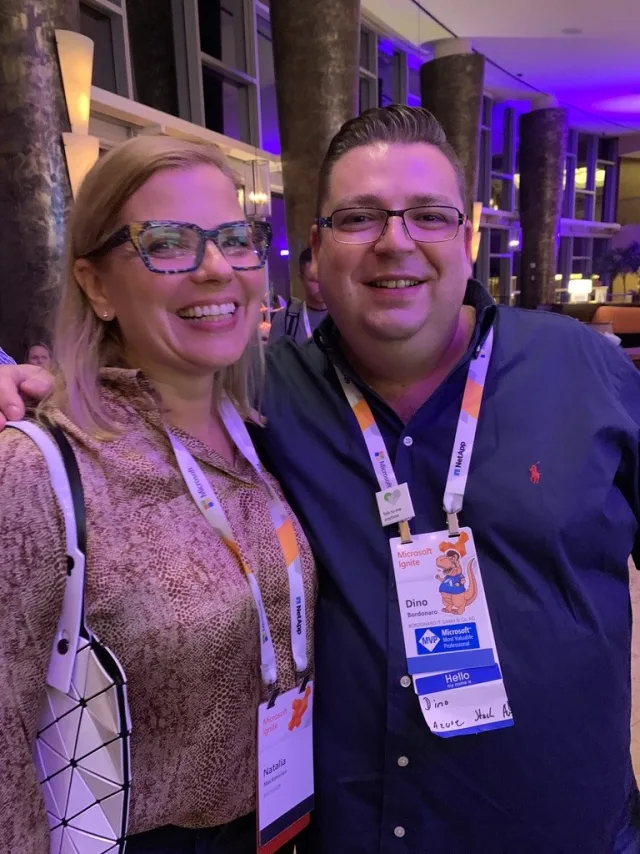
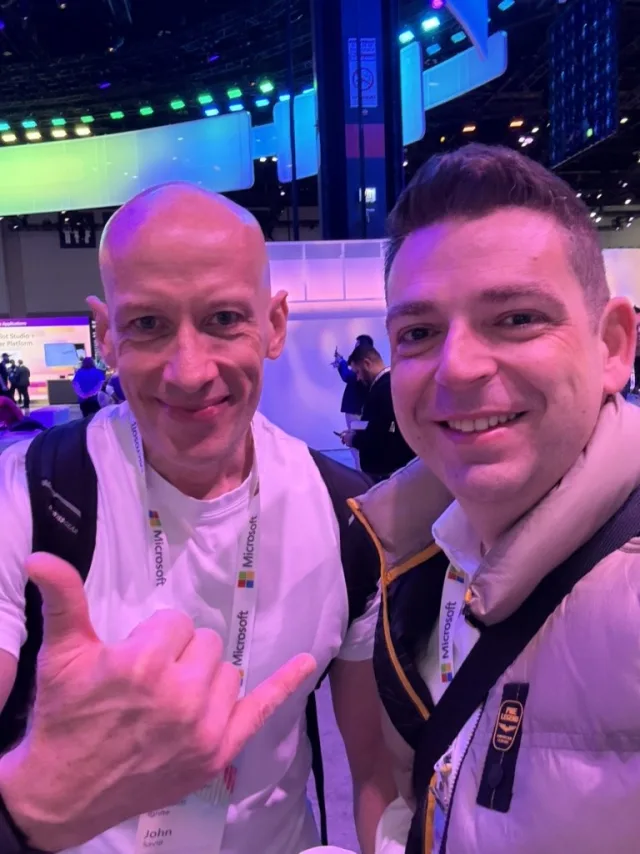
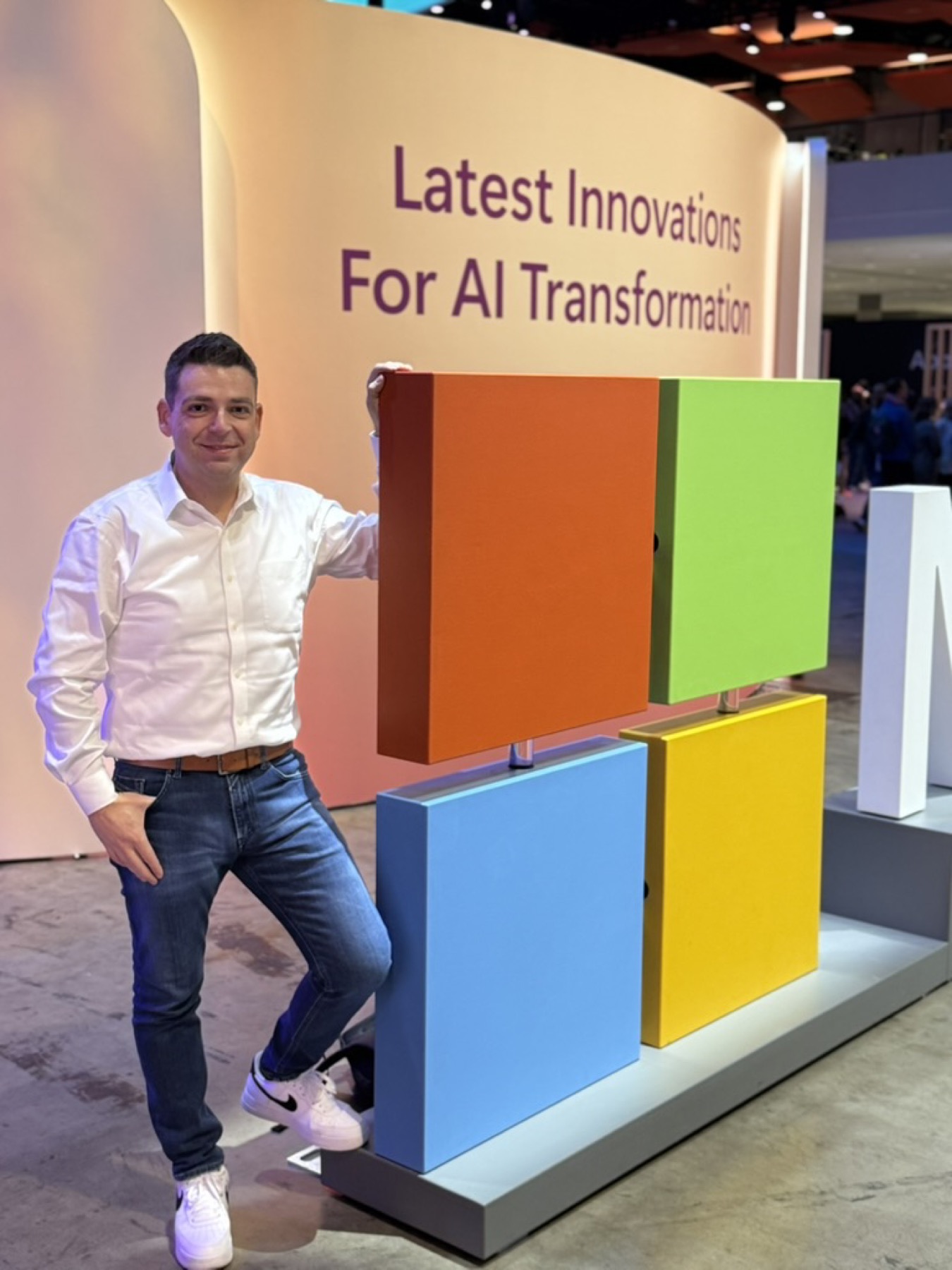
Microsoft Ignite
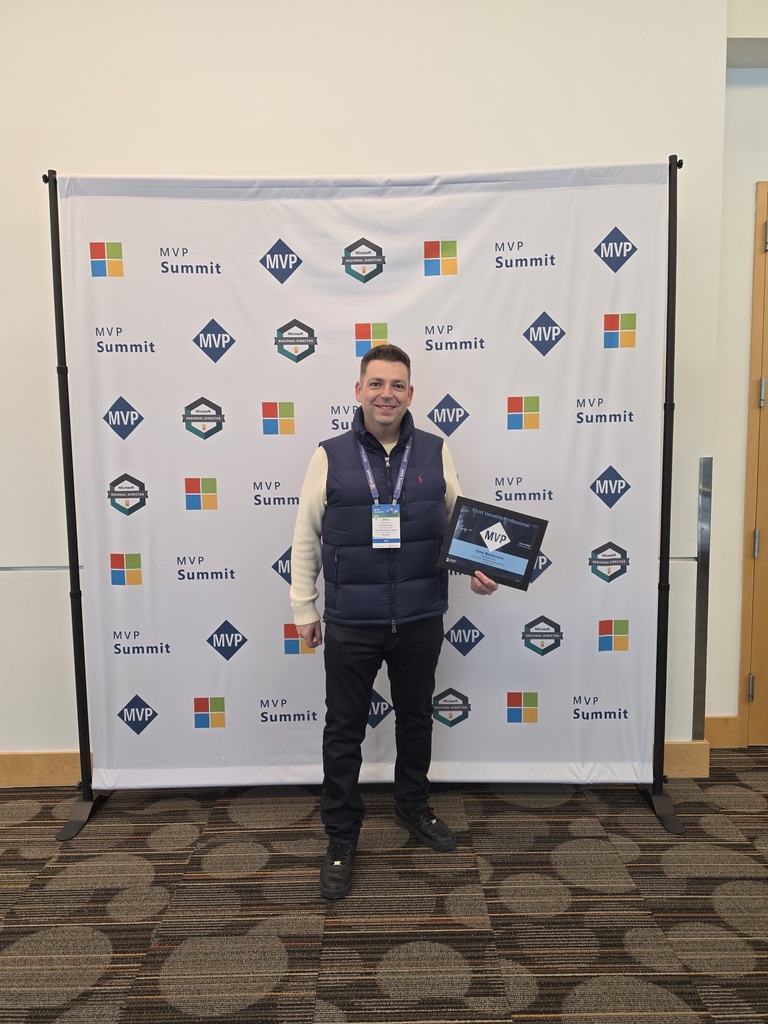
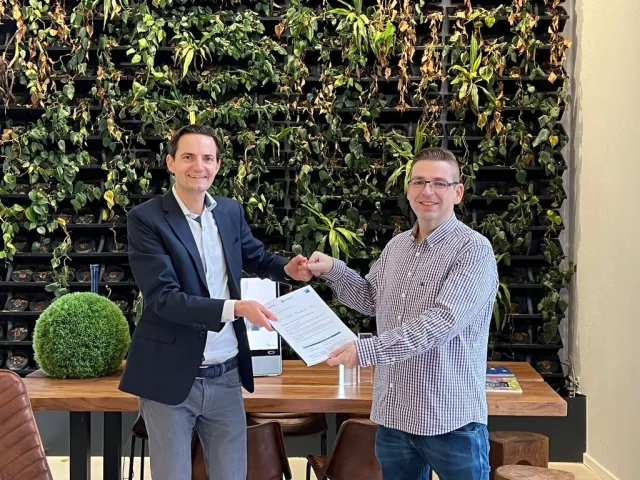
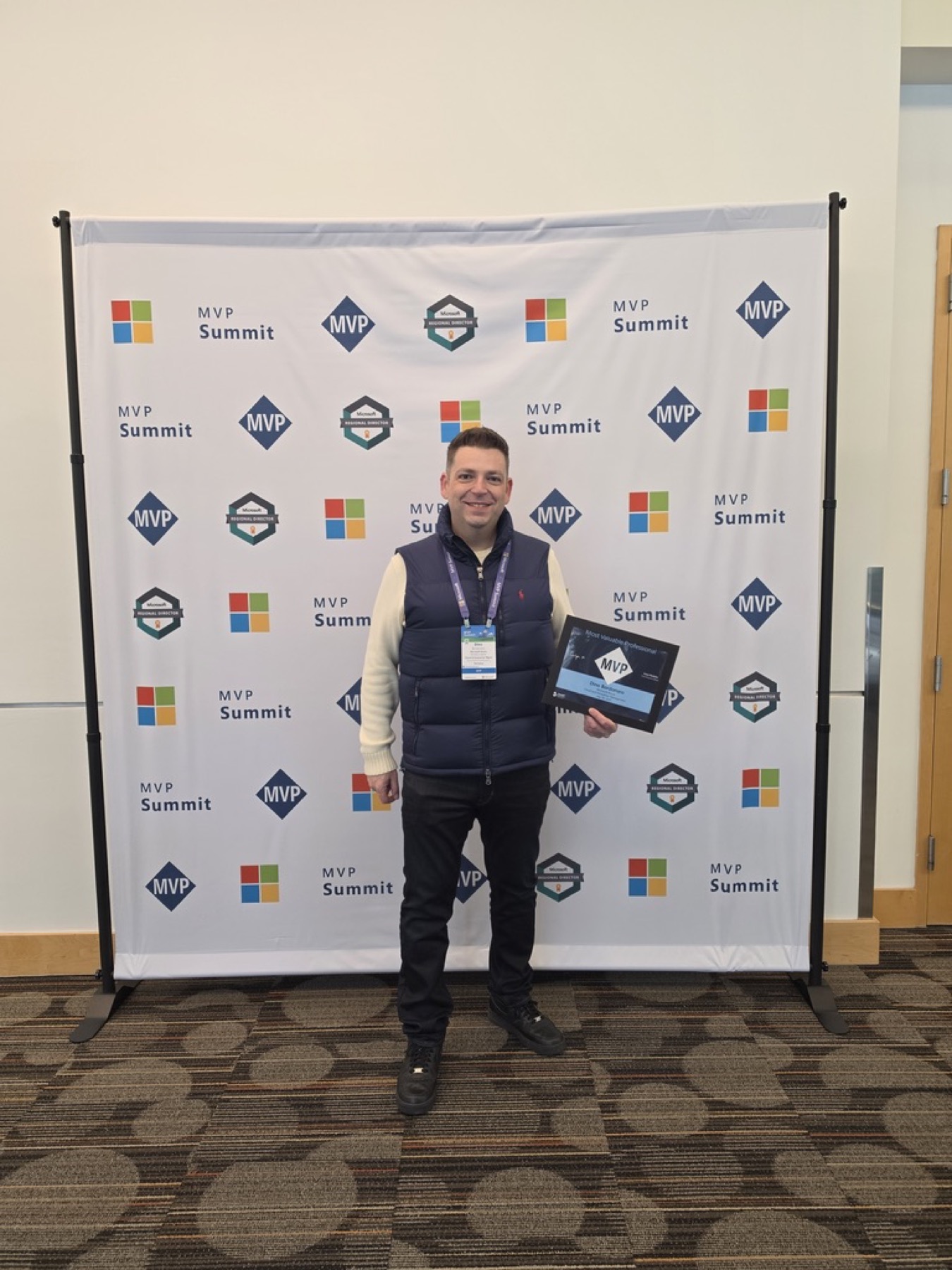
MVP award handover
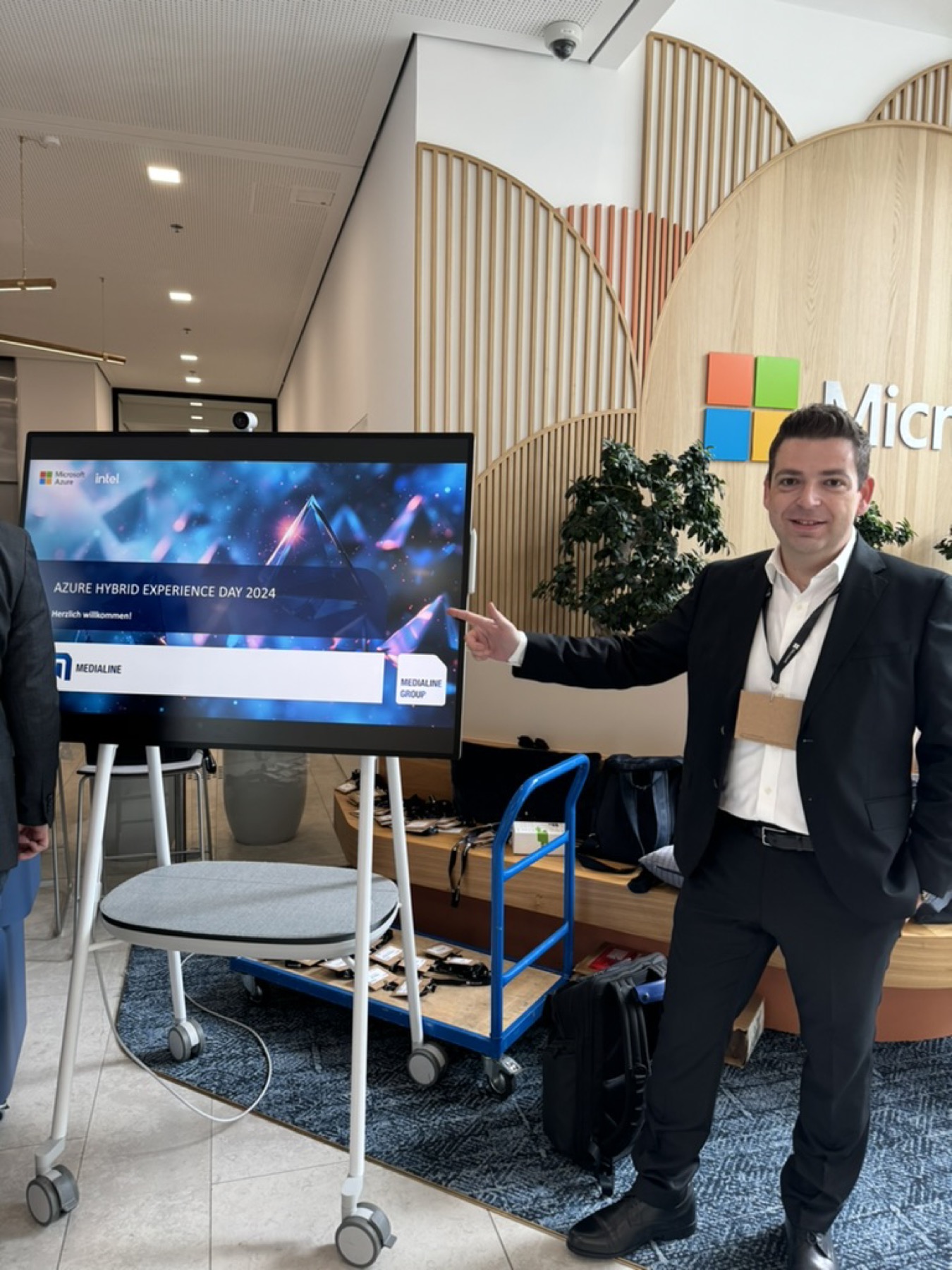
Hybrid Cloud Experience Day, conceived by Dino
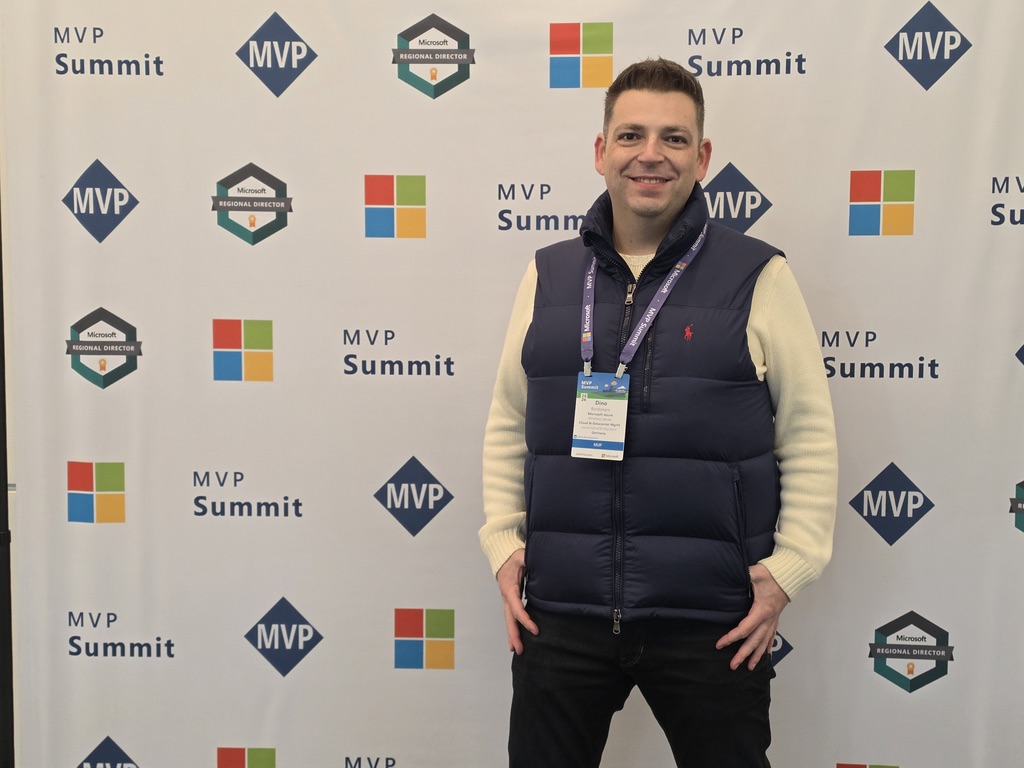
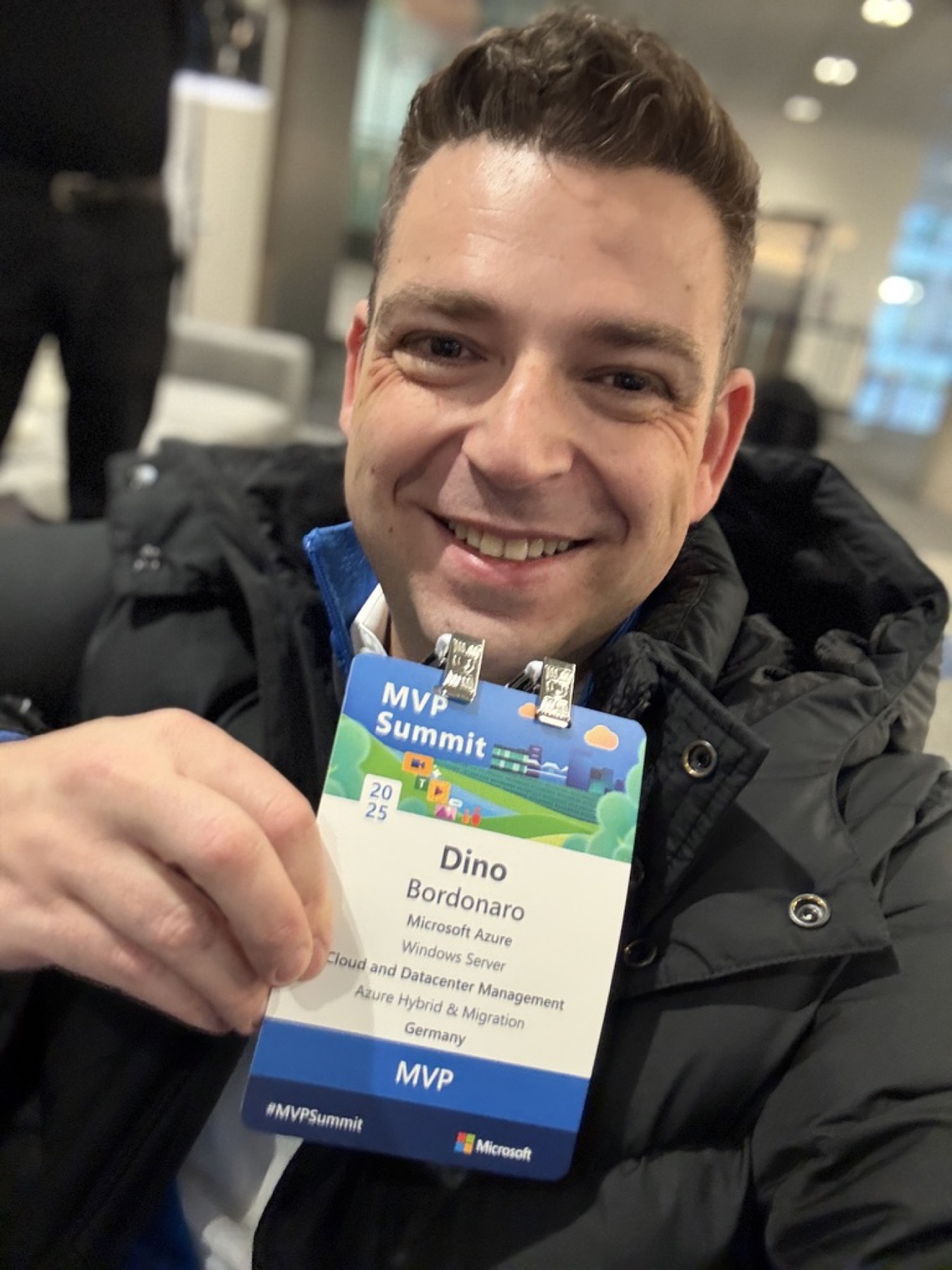
MVP badge in two categories

Redmond · MVP Global Summit · Microsoft Ignite · panels · community · partners · friends

The stage is the visible part. The lasting part often begins afterwards, when somebody carries the idea forward.

PASSING KNOWLEDGE ON

800+ people later, I am still curious about the next question.

Training is not a one-way street. If you stand in front of a group and genuinely listen, you learn every time.

The BORDONARO Academy grew from that belief: do not make difficult Microsoft technologies sound smaller than they are. Make them tangible enough for administrators, architects, sales teams, and decision-makers to use. With labs, real failure, repeatable paths, and room for the question no standard course anticipated.

The tracks remain visible here as part of my story. Anyone who wants to turn them into a learning journey will find the complete world behind them at the Academy.

Foundation and operations

  • FOUND-05Azure Foundation Express
  • OPS-10Azure Cloud Operator

Hybrid and architecture

  • ARCH-10Azure Hybrid Architect Express
  • LOCAL-5X5Azure Local Operator including Disconnected Operations
  • ASH-05Azure Stack Hub Bridge
  • LOCAL-01Azure Local Discovery Day

Security, automation, and AI

  • AI-05Sovereign AI Operator
  • IAC-05Azure DevOps & IaC in Practice
  • SEC-05Azure Security & Identity Deep Dive

People and organisations

  • SALES-05Azure Sales Accelerator
  • INHOUSEcustom in-house programs
  • WOFWorkforce of the Future
Explore the Academy

A world of its own for people who want to understand technology, not merely operate it.

PROJECTS · TRAINING · PARTNERSHIPS

These are not trophies. They are stories.

Every logo represents a different page in my flight log: a project, a training program, a partnership, a difficult problem, or a team that taught me something in return.

MicrosoftDell TechnologiesKnowledgeParkBMWMercedes-BenzDeutsche BahnTelekomBayerZeissSchaefflerWacker ChemieKfH
ArvatoAmadeusAKDBAkquinetLondon Business SchoolHealthcare, Finance, Defence & Aerospace (NDA)

Experience from projects, training, and partnerships with enterprises, critical infrastructure, and defence, some of it under NDA. The logos describe professional touchpoints and collaboration, not blanket endorsements by the organisations shown.

I HAVE TO BUILD IT

Talking is not enough for me.

My ideas usually become systems, formats, or companies. Not every experiment survives. The good ones get names.

BORDONARO IT

Architecture, an enterprise lab, and operations for Azure hybrid infrastructure. The world where technical conviction becomes production responsibility.

Visit website

BORDONARO AI

Sovereign AI on your own hardware: products, operations and the AI Academy. The world where AI stays in the building and people stay in charge.

Visit website

BORDONARO Academy

Training and workforce programmes for people who want to understand, design, and operate Microsoft technologies themselves.

Visit website

Sovereign Cloud Alliance

A network of specialists, partners, and MVPs working towards one operating model across cloud, data centre and edge.

Visit website

The enterprise lab

An infrastructure where ideas are allowed to fail safely first. Born from the same question: why wait for somebody else to build it?

See what happens in the lab

VERIFIABLE TRUST

Not my words. Traces you can verify.

From here on, others do the talking: recommendations, videos, articles, trainings, certifications, press and the three worlds that grew from the same curiosity.

WHAT REMAINS WHEN I LEAVE THE ROOM

Other people can tell you what it is like to work with me.

Dino is an exceptionally talented mix of technology and business. He is a passionate advocate for doing what is right, stays ahead of the curve with new technologies and has an innate gift for understanding how technology can be used to help customers solve their problems.
Vijay TewariVijay TewariDirector of Product Management, Google Cloud · former Microsoft product lead for Azure Stack
I love working with Dino. He is technical, professional, positive, passionate, and curious. He has become one of the global experts on Azure and Azure Stack who I go to for recommendations on making the product better.
David ArmourDavid ArmourPrincipal Product Manager Lead, Microsoft
It is great working with Dino, he is very professional and has great technical knowledge!
Thomas MaurerThomas MaurerEMEA Global Black Belt Sovereign Cloud, Microsoft

WATCH · READ · KEEP THINKING

Ideas that travelled beyond the room.

A good idea should remain useful after the presentation ends. These are some of the things that travelled further.

My videos

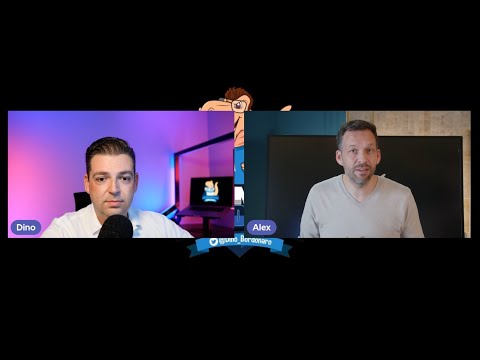
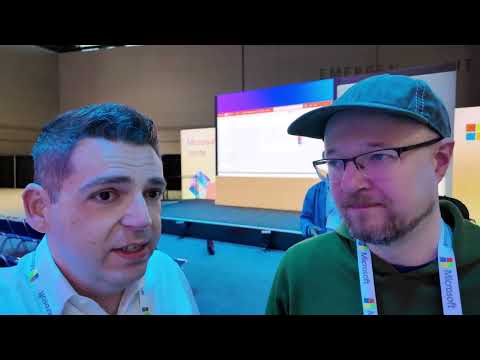
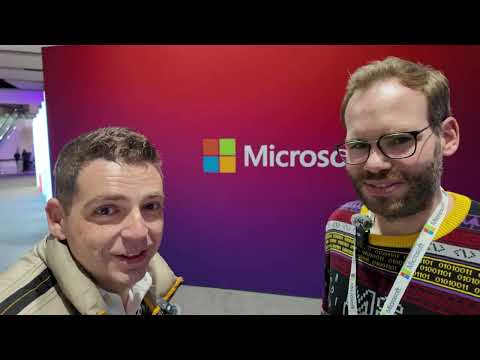
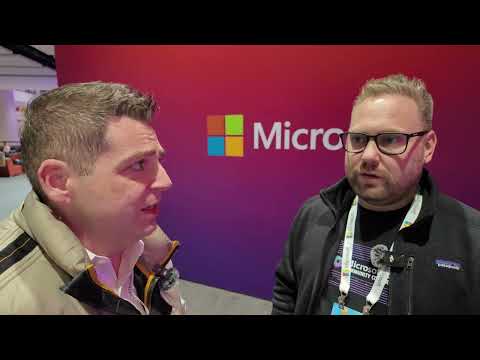
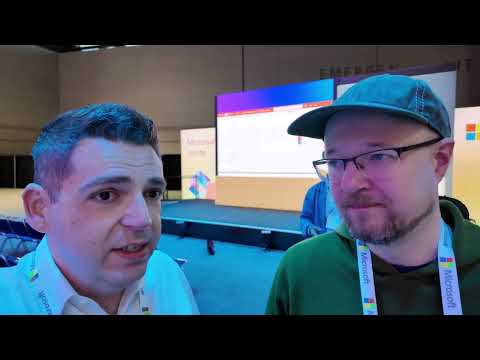
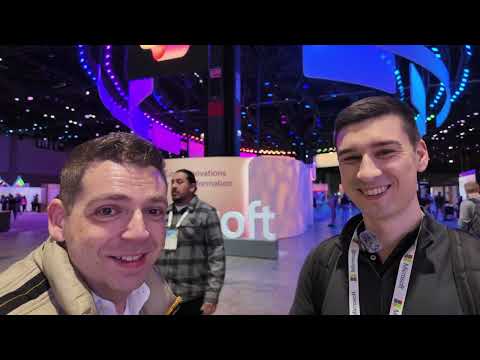
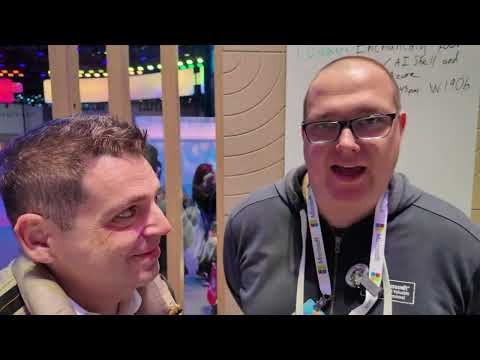
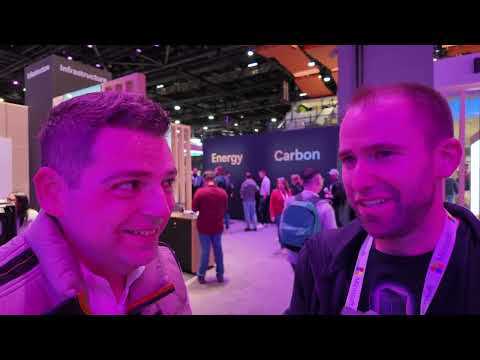
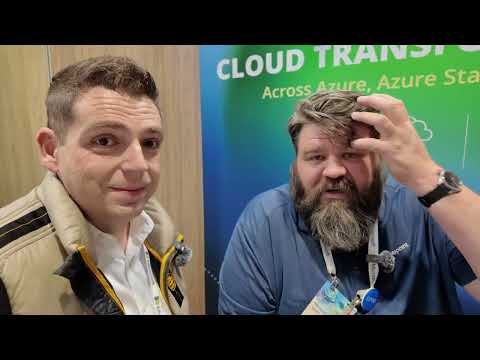
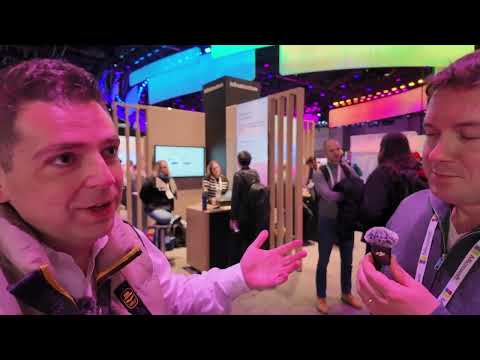
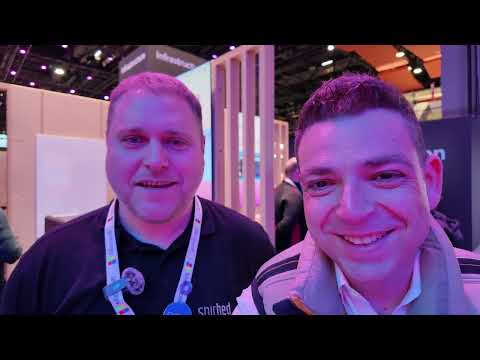
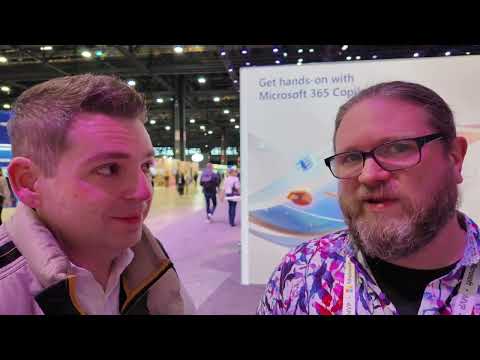
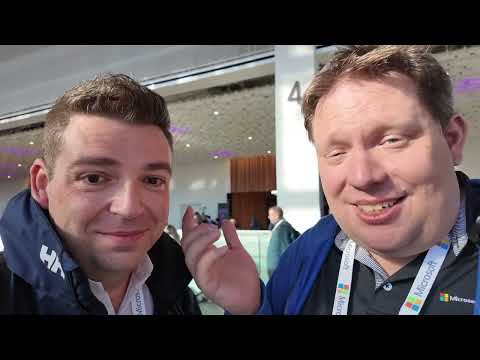
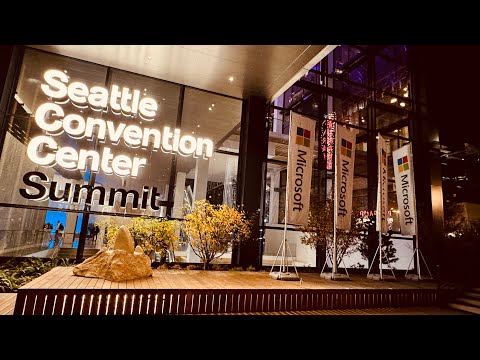
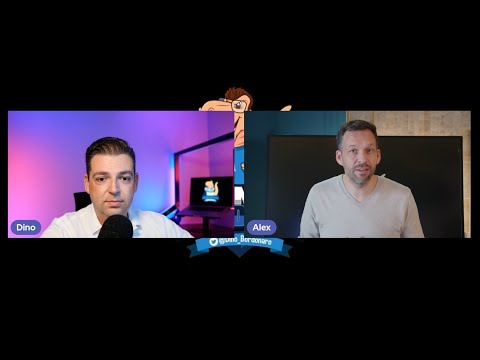
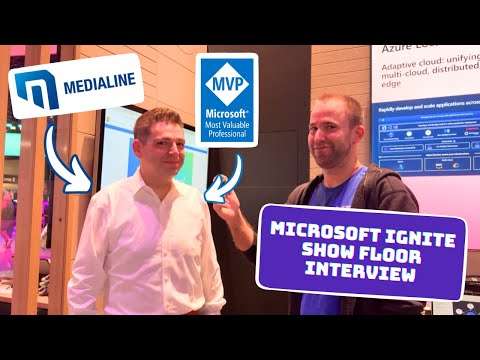
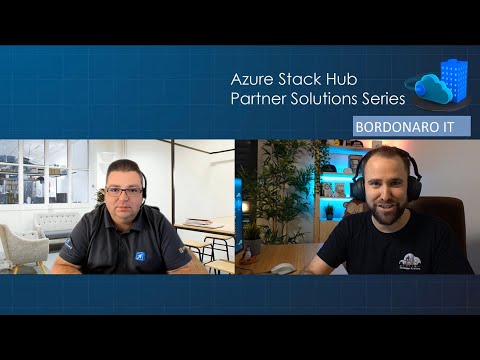
VIDEOKurzes Interview mit meinem Freund und Kollegen Tobias Kritten auf der Microsoft Ignite 2024YouTube · Dino Bordonaro · 2024Watch VIDEOKurzes Interview mit meinem Freund und Kollegen Björn Steinecke auf der Microsoft Ignite 2024YouTube · Dino Bordonaro · 2024Watch VIDEOShort Interview with Kenny Lowe at Microsoft Ignite 2024YouTube · Dino Bordonaro · 2024Watch VIDEOKurzes Interview mit meinem Consulting-Kollegen Peter Sommer auf der Microsoft Ignite 2024YouTube · Dino Bordonaro · 2024Watch VIDEOInterview mit meinem MVP-Kollegen Eric Berg auf der Microsoft Ignite 2024YouTube · Dino Bordonaro · 2024Watch VIDEOKurzes Interview mit dem one and only Thomas Maurer auf der Microsoft Ignite 2024YouTube · Dino Bordonaro · 2024Watch VIDEOShort Interview with my MVP Buddy Kristopher Turner at Microsoft Ignite 2024YouTube · Dino Bordonaro · 2024Watch VIDEOShort Interview about Azure Local with the one and only Cosmos Darwin at Microsoft Ignite 2024YouTube · Dino Bordonaro · 2024Watch VIDEOShort Interview with my MVP Buddy Jan-Tore Pedersen on Microsoft Ignite 2024YouTube · Dino Bordonaro · 2024Watch VIDEOShort Interview with my MVP Buddy Christopher Gill at Microsoft Ignite 2024YouTube · Dino Bordonaro · 2024Watch VIDEOIm Gespräch mit Raphael Köllner auf dem Weg zum Food Court: Insights zu Microsoft Copilot & AIYouTube · Dino BordonaroWatch VIDEORundgang auf der Microsoft Ignite: Erlebe den amerikanischen Tech-Spirit!YouTube · Dino BordonaroWatch VIDEOEin tiefgehendes Gespräch über Azure Stack, IT-Karrieren und die Zukunft der Hybrid-CloudYouTube · Dino BordonaroWatch
All videos on YouTube
Older video appearances

DINO/NOTES

What is keeping me awake right now.

Irregular notes from previews, the lab, the community, and the road. Things that excite me. Things that annoy me. Questions I do not yet have a finished answer for.

No fixed schedule. One note when there is genuinely something worth sharing.

To kick things off, here is a technical article from my own practice that I published on LinkedIn.

TECHNICAL ARTICLE · AZURE LOCAL

Why Expensive Azure Local Hardware Becomes Datacenter Decoration

7 Mistakes That Turn Investment Into Inventory

My most-read LinkedIn article from 24 May 2025
140,000+ views, 8 minute read

Expensive Azure Local hardware sitting unused as datacenter decoration

The hardware arrives on schedule. The project timeline looks aggressive but doable. Then reality hits: Active Directory is managed by Team A, networking by Team B, Entra ID by Team C, and permissions by Team D. Six months later, your Azure Local cluster is still sitting in boxes while warranty burns and executives ask uncomfortable questions.

This scenario plays out repeatedly because organizations treat Azure Local like “fancy Windows Server” instead of what it actually is: a hybrid cloud platform that requires coordinated expertise across multiple domains.

Read the full article

After 20+ years implementing hybrid infrastructure and witnessing this pattern countless times, I’ve identified the 7 critical mistakes that transform Azure Local from a strategic advantage into career-limiting delays. The good news? Every single one is preventable with proper planning and the right expertise.

Mistake #0: Choosing Partners Who Think Azure Local Is Just Windows Server

This is the foundational mistake that creates all the others. Too many partners and internal teams approach Azure Local as if it’s simply rebranded Windows Server with some cloud features bolted on. It’s not.

Azure Local is a hybrid cloud platform that extends your Azure tenant to on-premises infrastructure. It requires deep understanding of Azure Arc, hybrid networking, cloud governance, and modern application architectures. The implementation partner you choose, whether internal teams or external consultants, makes the difference between success and expensive failure.

The costly reality: Organizations that treat this as a straightforward infrastructure refresh end up with:

  • Months of delays coordinating prerequisites across teams
  • Misaligned expectations about complexity and timeline
  • Technical debt from “lift and shift” mentality instead of cloud-native optimization
  • Integration challenges that weren’t anticipated during planning
  • Full project cancelation

How to avoid this mistake:

  • Always ask potential partners about their actual Azure Local experience and certifications
  • Request references from real customer deployments, not just Hyper-V migrations
  • Ensure your partner understands the broader hybrid strategy, including Azure Arc services
  • Look for partners who can coordinate across multiple technical domains, not just server hardware

Mistake #1: Thinking This Game Is About Hardware Specifications

The biggest misconception? That Azure Local success depends on having the fastest CPUs, most memory, or premium storage. Wrong. This game is only about planning, planning, and planning. If you plan right, you get up to speed easier than saying 1, 2, 3.

I’ve seen perfectly spec’d hardware sit unused for months because teams focused on technical specifications instead of organizational coordination. Meanwhile, properly planned deployments with modest hardware deliver immediate business value.

The planning: Before you evaluate a single CPU benchmark, ensure you have:

  • Clear project ownership across all technical domains
  • Documented prerequisites for Active Directory, networking, and Azure tenant configuration
  • Stakeholder alignment on the hybrid cloud strategy, not just infrastructure refresh
  • Realistic timelines that account for cross-team coordination

Bottom line: Hardware is commodity. Planning and coordination are the differentiators.

Mistake #2: Sizing Without Understanding Your True IT Lifecycle

You need to know your IT lifecycle and workloads to specify the scale of your platform for now, in 36, or 60 months. Most organizations get this catastrophically wrong by using current VM allocations instead of actual usage patterns.

The assessment: Use tools like Azure Migrate to assess all your VMs and extract real usage data for CPU, memory, and storage. The assessment is all about “real usage,” which is a massive cost-saving opportunity. Instead of over-provisioning based on peak allocations, right-size based on actual demand patterns.

Beyond lift and shift: Don’t just take everything with you to the new platform. Sit with your teams and define the current model of operation versus the future model of operation. Get the best out of the project instead of “just having new hardware.”

Key sizing considerations:

  • Analyze actual resource utilization over 6-12 months, not peak allocations
  • Factor in modern application architectures that may use resources differently
  • Plan for Azure Arc services that will extend your local platform
  • Consider workload consolidation opportunities that reduce overall footprint
  • Account for growth, but base it on business projections, not IT assumptions

Mistake #3: Choosing Use Cases Without Strategic Thinking

Plan before building. The most expensive Azure Local failures start with unclear use cases that don’t align with business strategy or technical reality.

Data sovereignty requirements: Does data truly need to stay under customer control, or is this assumption based on outdated compliance interpretations? Many organizations discover their regulatory requirements are more flexible than assumed, opening cloud-first options that reduce complexity.

Bandwidth and stability assessment: Do you have enough bandwidth and stability for your WAN connection to support hybrid operations? Insufficient connectivity turns Azure Local into an expensive island instead of a cloud extension.

Disconnected operations reality check: Disconnected operations exist, but there are many pitfalls. Do you really need to be completely air-gapped? True disconnected mode significantly increases complexity and operational overhead. Most organizations benefit more from resilient connectivity than isolated operations.

Production deployment standards: Production deployments that need reliable, tested operation with the lowest risk for hardware or software outages should always use at least certified integrated systems or premier solutions. Certified systems are listed in the Azure Local Hardware Compatibility List. Don’t compromise on this for production workloads.

Mistake #4: Network Planning That Ignores Azure Local’s Unique Requirements

Do your network planning first and only use components listed in the Azure Local Hardware Compatibility List. This isn’t optional, it’s the difference between stable production operations and expensive troubleshooting exercises.

Hardware compatibility: Ensure your network hardware supports required functionality like RoCE or iWarp across datacenter rooms for rack-aware clusters and high availability. Network performance and configuration have massive impact on Azure Local stability and performance. Not doing it properly means failing in production later, costing significant money.

Minimum requirements: Meet minimum network speed and bandwidth for your network intents, minimum 10GBit for storage adapters, but plan for higher throughput based on workload requirements.

Network segmentation: Use network segmentation for your workloads. This makes tremendous sense from a security standpoint, especially if you operate OT/IT mixed-mode networks. Azure Local’s software-defined networking capabilities enable micro-segmentation that wasn’t possible with traditional infrastructure.

Common networking failures:

  • Underestimating east-west traffic between cluster nodes
  • Not validating RDMA functionality across the entire network path
  • Insufficient bandwidth planning for storage, backup, and replication traffic
  • Missing redundancy that creates single points of failure

Mistake #5: Governance and Security as an Afterthought

Your Azure Local deployment gets deployed into your own Azure tenant. You need to ensure this tenant meets the highest security standards while having the special tenant settings required for successful Azure Local deployment to your infrastructure.

Azure tenant security: Use Entra ID security services to extend cloud-native security to your hybrid infrastructure. This isn’t just best practice, it’s important for maintaining consistent security posture across your hybrid environment.

Management layer protection: The management layer of Azure Local shouldn’t be accessible from all networks. The network segment for management should only be accessible on specified networks using Conditional Access, Privileged Identity Management (PIM), and privileged workstations.

Active Directory integration challenges: Azure Local needs Active Directory. If you want to use your existing Active Directory, ensure you fulfill every necessary step from Azure Local documentation. The deactivation of rights inheritance for the OU holding Azure Local objects is particularly critical and commonly missed.

Least privilege principles: Verify you have the minimum necessary rights assigned for the deployment account, or create custom roles as described in Azure Local documentation. Over-privileged accounts create security risks and compliance issues.

The coordination challenge: These security requirements span multiple teams (Active Directory, Entra ID, networking, compliance). Without proper project coordination, security configuration becomes the bottleneck that delays deployment for months.

Mistake #6: Connectivity Planning That Ignores Azure Local’s Cloud-First Nature

Ensure you have enough bandwidth and stability for your WAN connection to Microsoft. Azure Local isn’t standalone infrastructure, it’s an extension of Azure that requires reliable cloud connectivity for optimal operation.

Connectivity realities: ExpressRoute and Microsoft Azure Peering Service (MAPS) aren’t fully supported, meaning you need a regular WAN internet connection for Azure Local to access its backend in Azure. Don’t assume premium connectivity options eliminate the need for standard internet access.

High availability requirements: Install redundant WAN connections with automatic failover for high availability if your business requires it. Azure Local’s hybrid nature means connectivity failures affect both local operations and cloud integration.

Bandwidth planning considerations:

  • Management and monitoring traffic to Azure
  • Azure Arc service communication requirements
  • Backup and disaster recovery data transfer
  • User access to hybrid applications and services

Mistake #7: Backup and DR Planning That Ignores Azure Local’s Unique Architecture

It’s absolutely necessary to choose the right sizing and capacity reserves. In a two-node system, each node needs capacity to hold the complete workload amount to ensure one node can fail or enter maintenance for patches and updates without service disruption.

Backup solution compatibility: You need a compatible backup solution. Azure Local is not another flavor of Hyper-V Server, it’s its own operating system. You can use backup software from Microsoft or third parties like Commvault, Veeam, etc. Standard deployments include no backup capabilities. You need a separate, compatible backup solution.

Performance planning: Ensure your network speed and backup system can create backups within your required time windows for daily operations. Test this before production deployment, not after.

Recovery testing: Test restores regularly to ensure your backup works and understand how long restores take for accurate RTO planning. Untested backups are no backups.

Azure Site Recovery integration: Use Azure Site Recovery for DR scenarios, but test regularly. Ensure systems properly start in Microsoft’s Azure Cloud and practice both failover and failback procedures. Many organizations test failover but never practice failback, creating dangerous operational gaps.

The 3-2-1 rule: Always have backup for your backup. Use cold storage as a tier outside your regular backup storage for protection against ransomware encryption. The most common rule: 3 copies of your data, 2 copies local, one outside your company and network.

The Path Forward: Getting Azure Local Right

Azure Local represents a significant opportunity to accelerate hybrid cloud adoption while maintaining control over critical workloads. But success requires treating it as the hybrid cloud platform it is, not as upgraded server hardware.

The organizations that succeed are those that:

  • Start with hybrid cloud strategy rather than infrastructure specifications
  • Coordinate across all technical domains from day one
  • Choose partners with proven Azure Local experience and hybrid cloud expertise
  • Plan extensively before purchasing hardware
  • Test everything before production deployment

The cost of getting this wrong isn’t just project delays, it’s missed business opportunities, career-limiting failures, and expensive do-overs that could have been avoided with proper planning and expertise.

Read the original on LinkedIn


BEYOND THE SERVER RACK

A life without side projects would be far too straight.

I was born on December 17, 1980, live near Speyer in Germany, and am the father of two daughters. My home base is Römerberg. My second coordinate is EDRY.

I fly, collect Marvel and Lego, like cars and Vespas, get lost in cities, build AI systems, and struggle to walk past a technical problem without at least wondering how I would solve it.

Speaking freely comes more naturally to me than small talk. My memory works in pictures. And improvisation is probably the kindest description of my willingness to take off without a completed flight plan when the destination is worth the journey.

Flight log

since 09/2025
BORDONARO IT GmbH & Co. KGBORDONARO IT
CEO · Sovereign Cloud Architect · Microsoft MVP for eight consecutive years

Relaunch of my company with a focus on Microsoft Adaptive Cloud: Azure, Azure Local and Azure Arc

BORDONARO Academy, workforce programs and the Sovereign Cloud Alliance

Full managed service for Azure Stack Hub and Azure Local systems worldwide, including public sector and defence

since 10/2025
Binbox Global Services
Chief Cloud Architect (external mandate)

Azure Local and Azure Arc enablement for the teams in Bucharest: architecture, standards, knowledge transfer

02 - 09/2025
My lab & Microsoft community
Self-funded research: Adaptive Cloud & AI

Deep dive into Microsoft Adaptive Cloud and AI: MVP Summit, Ignite and expanding the own lab

11/2023 - 01/2025
Medialine Group
Lead Architect Microsoft Multicloud Solutions

Design and execution of advanced Azure solutions starting from the presales stage

Leading a high-performance team across cloud and datacenter disciplines

04/2022 - 12/2023
Medialine Group
Team Lead Azure · Microsoft MVP

2022 merger of BORDONARO IT with the Medialine Group

Built and led the Azure team, set architecture standards and delivery quality

2021 - 2023
VORAX-IT GmbH
Managing Director

Managing director of VORAX-IT in Heddesheim, in parallel to architecture work in Azure projects

02/2019 - today
Microsoft
Microsoft Most Valuable Professional

First MVP award in February 2019, signed by Satya Nadella

Defended every year since, currently Microsoft Azure in the Azure Hybrid & Migration category and Cloud and Datacenter Management in the Windows Server category

2014 - 2022
BORDONARO IT GmbH & Co. KGBORDONARO IT
Founder · General Manager · Senior Cloud Solution Architect

Founded and built the consulting firm for secure hybrid cloud infrastructure: Azure Stack Hub, Azure Local, Azure Arc

Fully automated Azure Stack Hub rollout for a nationwide dialysis clinic network: 200+ clinics, 7,000 employees, life-critical dialysis 24/7 in clinics and at home

Top 100 Innovator 2019 and 2020, Top Consultant 2020. Merged with the Medialine Group in 2022

2008 - 2014
ALTEMO IT-Systemhaus / ALTEMO GmbH & Co. KG
Owner & Managing Director

Founded a full-service IT company, ran it for six years and sold it successfully. Entrepreneur DNA since 2008

1997 - 2007
Apprenticeship & first stations
From IT specialist to entrepreneur

IT specialist apprenticeship in system integration (BSC Systemhaus, Speyer), service technician at Bechtle for ALSTOM Power, first own IT company COMTRIXX in Mannheim (2002-2006), Technical Sales Manager EMEA at MTC Software (2007)

// Enterprise references since 2008. Defence projects under NDA. Full resume on request.

Entrepreneurship

First web agency & hosting

Founded at 20, just as the internet took off in the early 2000s: my own web agency with two partners, PHP development, and an established web-hosting business on SUSE Linux, with a 10 Mbit/s leased line to Telekom and two S2M trunks that let up to 50 customers dial in simultaneously via ISDN.

ALTEMO IT-Systemhaus

Founded at 26, led for six years, and successfully sold.

BORDONARO IT GmbH & Co. KG

My own company for Azure hybrid architecture, the enterprise lab, and operations.

Some people call it a career. To me, it is a very long sequence of interesting problems.

SKILL MATRIX

My toolbox does not stop at Microsoft.

Pick a category and watch the toolbox sort itself: from Azure to VMware and Proxmox, to Linux, networking, and firewalling.

  • Microsoft AzureCloud & Hybrid
  • Azure LocalCloud & Hybrid · Datacenter & Operations
  • Azure ArcCloud & Hybrid · Automation & AI
  • Azure Stack HubCloud & Hybrid · Datacenter & Operations
  • Sovereign CloudCloud & Hybrid
  • Disconnected OperationsCloud & Hybrid · Datacenter & Operations
  • Hybrid architectureCloud & Hybrid · Networking & Firewalling
  • Hyper-VVirtualization
  • VMware vSphere & ESXiVirtualization
  • Proxmox VEVirtualization · Operating Systems
  • System Center VMMVirtualization · Datacenter & Operations
  • Storage Spaces DirectVirtualization · Datacenter & Operations
  • Windows ServerOperating Systems · Datacenter & Operations
  • SUSE LinuxOperating Systems
  • Debian & UbuntuOperating Systems
  • Failover clusteringDatacenter & Operations · Operating Systems
  • Routing & SwitchingNetworking & Firewalling
  • VLAN & segmentationNetworking & Firewalling
  • VPN & ExpressRouteNetworking & Firewalling · Cloud & Hybrid
  • Sophos FirewallNetworking & Firewalling
  • pfSenseNetworking & Firewalling
  • Fortinet FortiGateNetworking & Firewalling
  • Microsoft Entra IDCloud & Hybrid · Networking & Firewalling
  • Zero TrustNetworking & Firewalling · Cloud & Hybrid
  • Datacenter designDatacenter & Operations
  • Storage & BackupDatacenter & Operations
  • Disaster RecoveryDatacenter & Operations · Virtualization
  • Monitoring & telemetryDatacenter & Operations · Automation & AI
  • PowerShellAutomation & AI · Operating Systems
  • Infrastructure as CodeAutomation & AI · Cloud & Hybrid
  • Azure DevOpsAutomation & AI
  • Local AI & RAGAutomation & AI

Type ratings§06 / ratings

Curiosity does not replace fundamentals.

Pilots call it a type rating. Microsoft calls it certification. Nineteen of them are recorded in my flight log, from Fundamentals to Expert level.

Every tile links directly to the official Microsoft Learn page for the certification.

Learning paths

How I got here.

Four routes through official Microsoft certifications, which I walked myself in this order. Every route ends in a title.

The path to hybrid & datacenter expert

Microsoft Certified associate badgeWindows Server Hybrid Administrator · Azure Stack Hub Operator (legacy) · Dino's home turf

The path to cloud architect

Microsoft Certified expert badgeMicrosoft Certified: Azure Solutions Architect Expert

The path to security architect

Microsoft Certified expert badgeMicrosoft Certified: Cybersecurity Architect Expert

The path to DevOps engineer

Microsoft Certified expert badgeMicrosoft Certified: DevOps Engineer Expert

All certifications

Microsoft Certified associate badge
AZ-104
Azure Administrator

Operating Azure environments: identity, governance, storage, compute and virtual networks.

Microsoft Learn
Microsoft Certified specialty badge
AZ-140
Azure Virtual Desktop Specialty

Planning, deploying and operating Azure Virtual Desktop at enterprise scale.

Microsoft Learn
Microsoft Certified associate badge
AZ-204
Azure Developer

Developing cloud applications with Azure services, APIs, Functions and containers.

Microsoft Learn
Microsoft Certified expert badge
AZ-305
Azure Solutions Architect Expert

Designing complete Azure solution architectures: compute, networking, storage, identity.

Microsoft Learn
Microsoft Certified expert badge
AZ-400
DevOps Engineer Expert

Building CI/CD pipelines, infrastructure as code and DevOps processes on Azure.

Microsoft Learn
Microsoft Certified associate badge
AZ-500
Azure Security Engineer

Securing Azure: identity, networking, compute, data and security operations.

Microsoft Learn
Microsoft Certified legacy badge
AZ-600
Azure Stack Hub Operator

Operating Azure Stack Hub: the certification has since been retired by Microsoft.

Microsoft Learn
Microsoft Certified associate badge
AZ-700
Azure Network Engineer

Planning and operating Azure networking: routing, VPN, ExpressRoute, private access.

Microsoft Learn
Microsoft Certified associate badge
AZ-800
Windows Server Hybrid Administrator

Administering Windows Server across hybrid environments, in the datacenter and in Azure.

Microsoft Learn
Microsoft Certified fundamentals badge
AZ-900
Azure Fundamentals

Fundamentals of cloud concepts, Azure services, pricing models and governance.

Microsoft Learn
Microsoft Certified expert badge
SC-100
Cybersecurity Architect Expert

Designing security strategies across identity, infrastructure, data and applications.

Microsoft Learn
Microsoft Certified associate badge
SC-200
Security Operations Analyst

Detecting and responding to threats with Microsoft Sentinel and Microsoft Defender.

Microsoft Learn
Microsoft Certified associate badge
SC-300
Identity & Access Administrator

Managing identities, access and authentication with Microsoft Entra ID.

Microsoft Learn
Microsoft Certified associate badge
SC-400
Information Protection Administrator

Protecting information and implementing compliance requirements with Microsoft Purview.

Microsoft Learn
Microsoft Certified fundamentals badge
SC-900
Security & Compliance Fundamentals

Fundamentals of security, compliance and identity across Microsoft cloud services.

Microsoft Learn
Microsoft Certified legacy badge
70-537
Azure Stack Hybrid Cloud

Operating an Azure Stack hybrid cloud, the predecessor exam to the AZ-600.

Microsoft Learn
Microsoft Certified legacy badge
MCP
Microsoft Certified Professional

The classic Microsoft certification program before the shift to role-based certifications.

Microsoft Learn

Certifications do not prove everything. But they show that curiosity still respects the fundamentals.

PRESS · PODCASTS · EVENT ORGANIZERS

For people with a deadline.

Approved press photography, short and long biographies, speaker one-sheet, and verifiable links, ready to use within the stated terms.

Preserve existing image credits and usage terms.

THE NEXT GOOD QUESTION

If technology will not leave you alone either, we should know each other.

You do not need a project right now. One good question is enough. Let us talk for 30 minutes, without slides, a pitch or a manufactured agenda.

If you were actually looking for one of my other worlds